
By Megy Karydes
As part of a series of “fireside chats” sponsored by R.I.S.E. Artisan Fund, Alejandra Rivera, co-founder and CEO of PALLAY; Hans Valdez, co-founder of MIA PERU; and Kennedy Leavens, founder and executive director of Awamaki, discussed their work with Indigenous artisans in the Peruvian Andes.
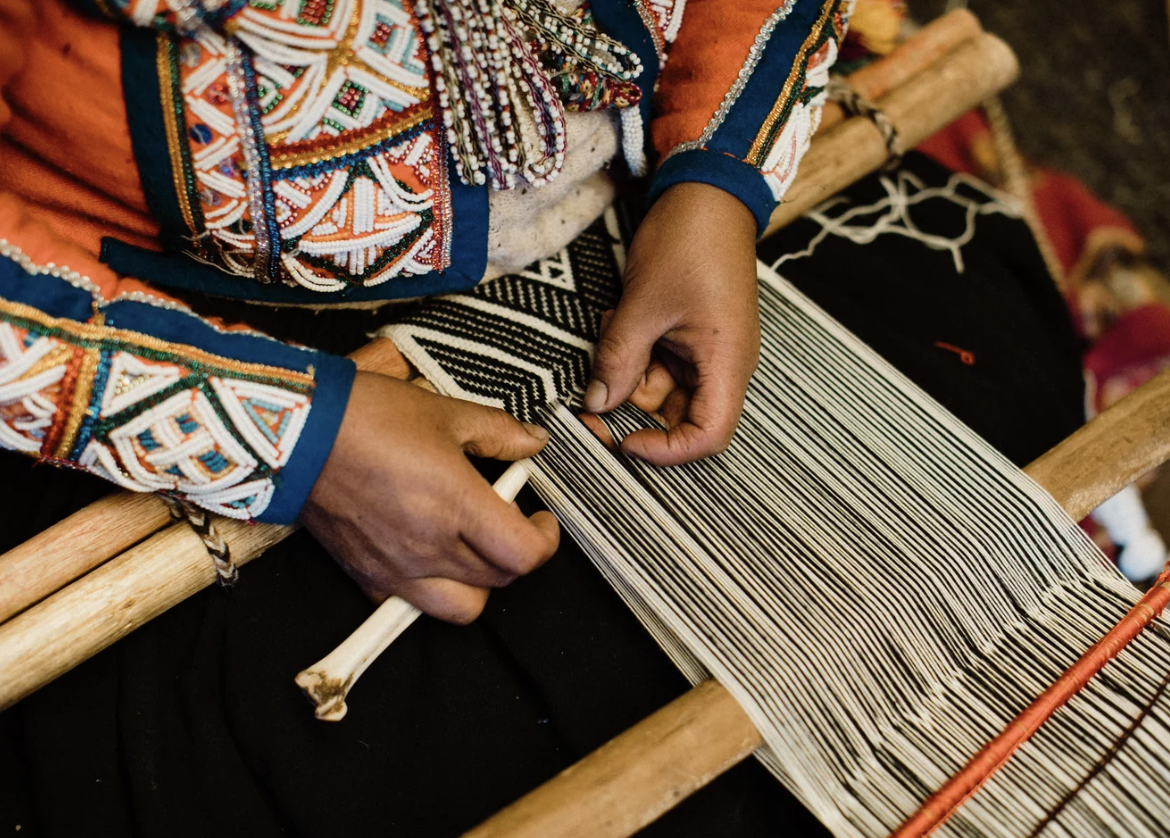
In the Andes, “pallay” refers to ancestral iconography: the rivers, mountains, suns, and stars that women weave into cloth. Alejandra Rivera, who named her company after the word, remembers what one master weaver told her: “For me, weaving is a language.”
PALLAY in Cusco, MIA PERU in Lima, and Awamaki in Ollantaytambo work with more than 600 artisans, most of them Indigenous women, to keep that language economically alive. Each operates a different model, but all three face the same question: how to sell handmade work in a market built around machine-made consistency.
© 2026 Awamaki
Three Models, One Tradition
PALLAY, a fair trade certified, triple-impact social enterprise founded in 2014, works with 104 women master weavers in four high-Andean communities and 18 local artisans who turn their textiles into garments, accessories, and home decor. Their items are sold in three Cusco shops and luxury hotels.
MIA PERU, short for Mothers in Action, began when Valdez, then a tour guide, saw tourists buying “alpaca” sweaters for $10 or $15. “That's not an alpaca sweater; it's impossible,” he recalled. The sweaters were made of synthetic wools, and unsuspecting tourists would buy them, thinking they were local alpaca wool. His mother and co-founder, América Durand, at the time was donating items to Andean communities. “Instead of giving them donations, why don’t we give them a job?” Valdez asked.
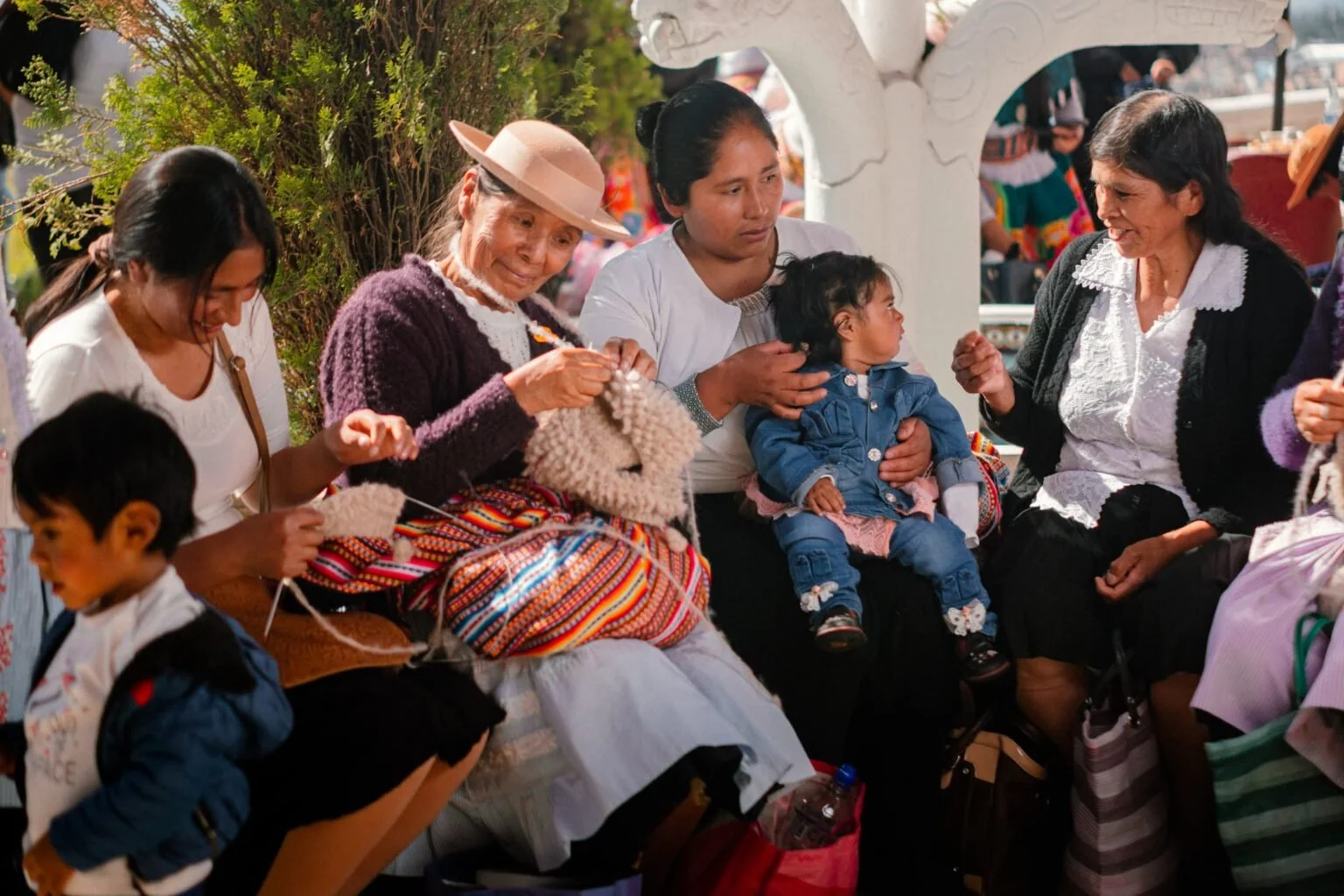
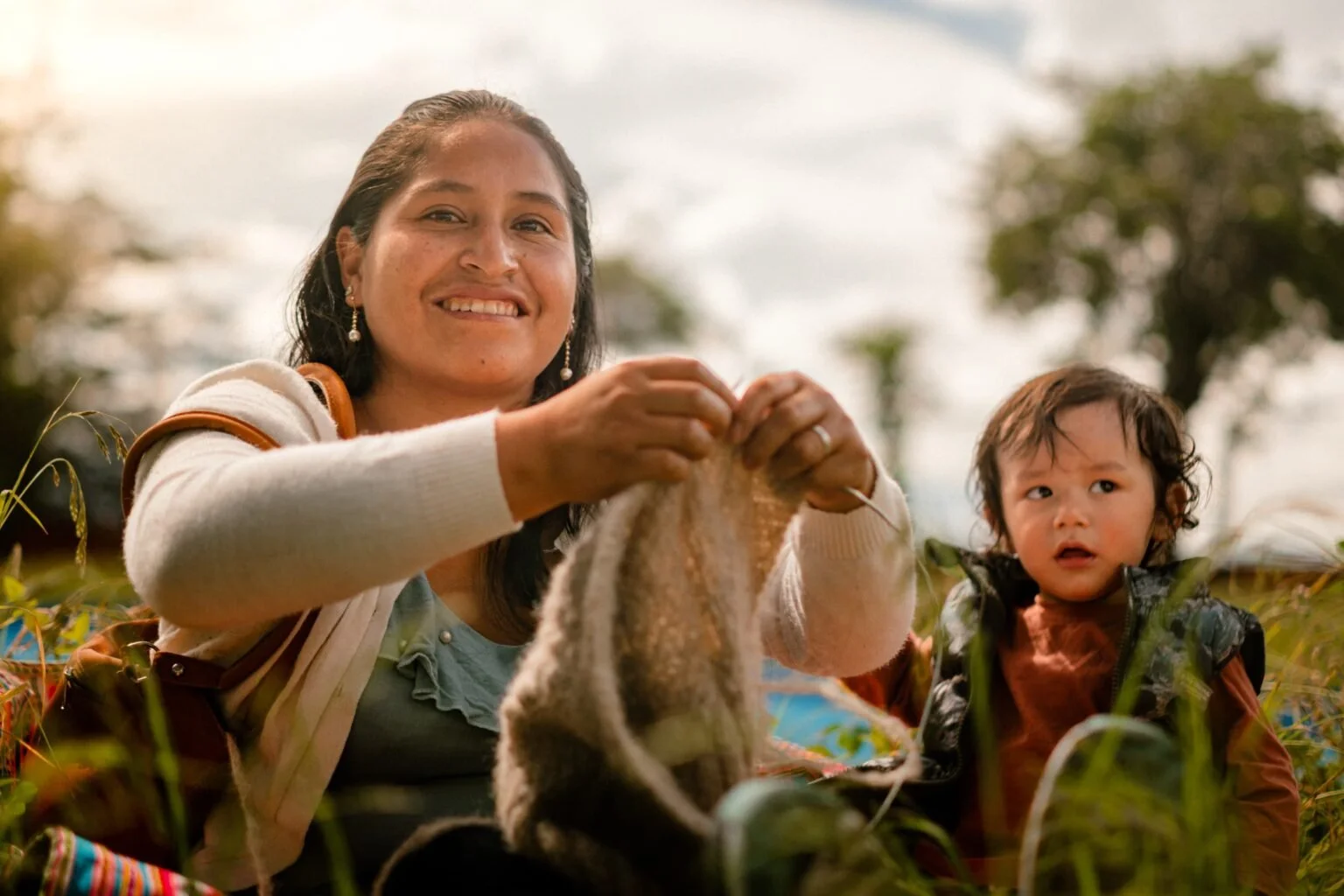
Today MIA PERU is a fair trade certified company that supplies alpaca yarn to women who knit at home around Huancayo, in central Peru, so they can earn an income while caring for their families. It started with 12 knitters and now works with more than 300, exporting hand-knit alpaca garments to boutiques abroad and adapting Peruvian craftsmanship to contemporary fashion markets.
Awamaki, founded in 2009, operates as both a Peruvian association and a U.S. nonprofit. It works with about 200 artisans in rural communities above Ollantaytambo, in the Sacred Valley. It runs a shop, sells to U.S. retailers, and hosts travelers in artisans' villages.
© 2026 Awamaki
© 2026 Awamaki
The Problem With Perfect
Handmade work varies, yet buyers, even small boutiques ordering ten units, expect every piece to match. All three enterprises pair flexible home-based production with quality standards meant to satisfy those buyers, but each has made different trade-offs to get there.
When Valdez brought sweaters of handspun, naturally dyed yarn to a trade show, buyers balked at uneven sleeves and shades. MIA PERU responded by building quality control into its process to meet international wholesale standards. It switched to certified alpaca yarn from two of Peru's largest mills, Michell and Inca Tops, holds knitters to a tolerance of about one centimeter, and adapts Peruvian styles to what women in New York and Paris wear. Awamaki sometimes switches to commercially dyed yarn for export orders but keeps every design rooted in tradition. PALLAY keeps its ancestral technique intact and resets buyers' expectations instead, accepting that its textiles will never look factory-made.
Even with those controls, two sweaters knit from the same pattern and the same yarn will never be identical. Each knitter holds her yarn at her own tension, and that tension shows up in the gauge, the drape, and the length of a sleeve. The variation, Valdez said, is just “the normal process of a handmade product.”
So for an order of 30 sweaters, MIA PERU's artisans knit 35. The team selects the pieces that most closely match the buyer’s specifications and sells the rest through other channels, including consignment in Lima. “It's not like they have made a mistake,” Valdez said.
© 2026 MIA PERU
© 2026 MIA PERU
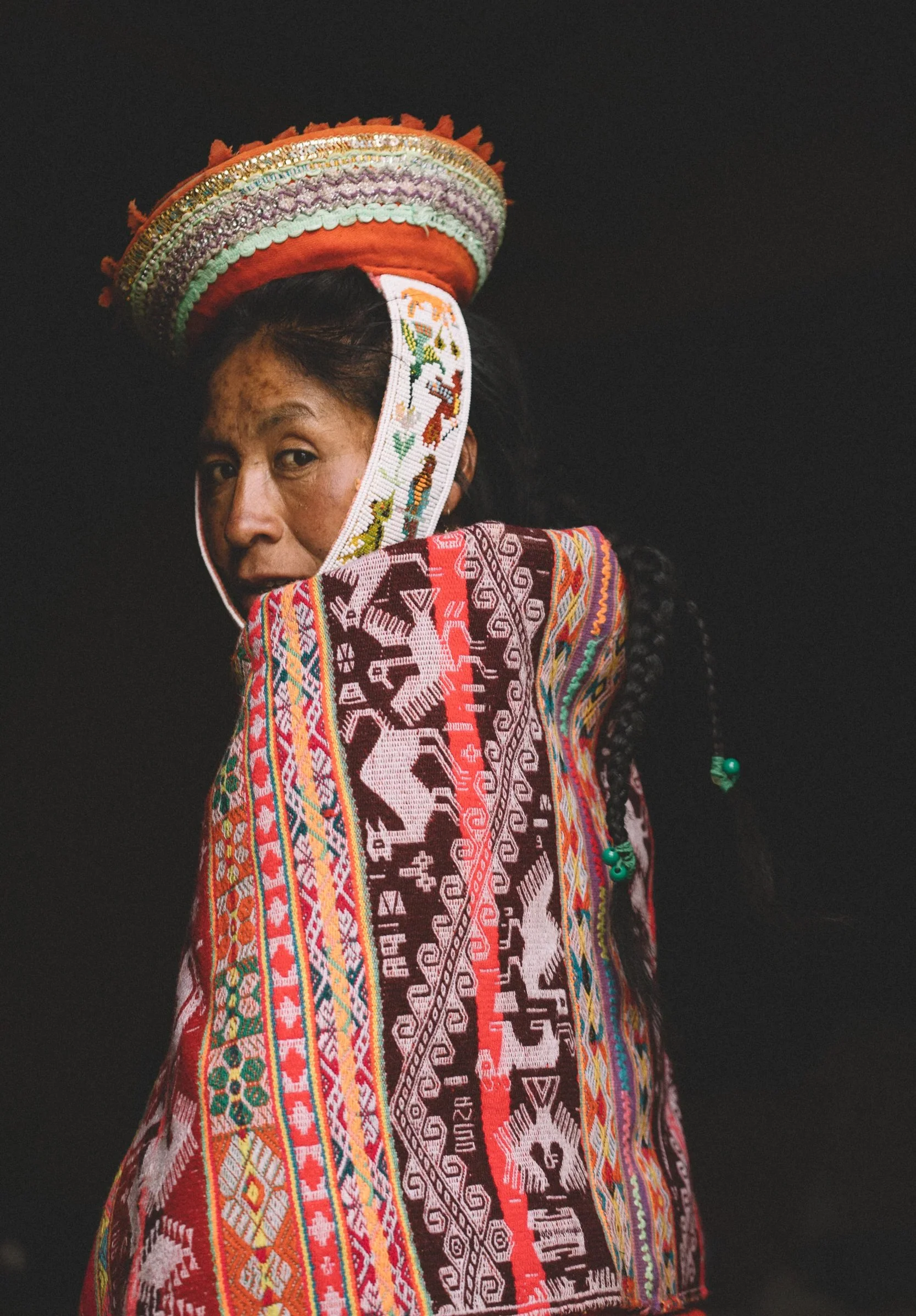
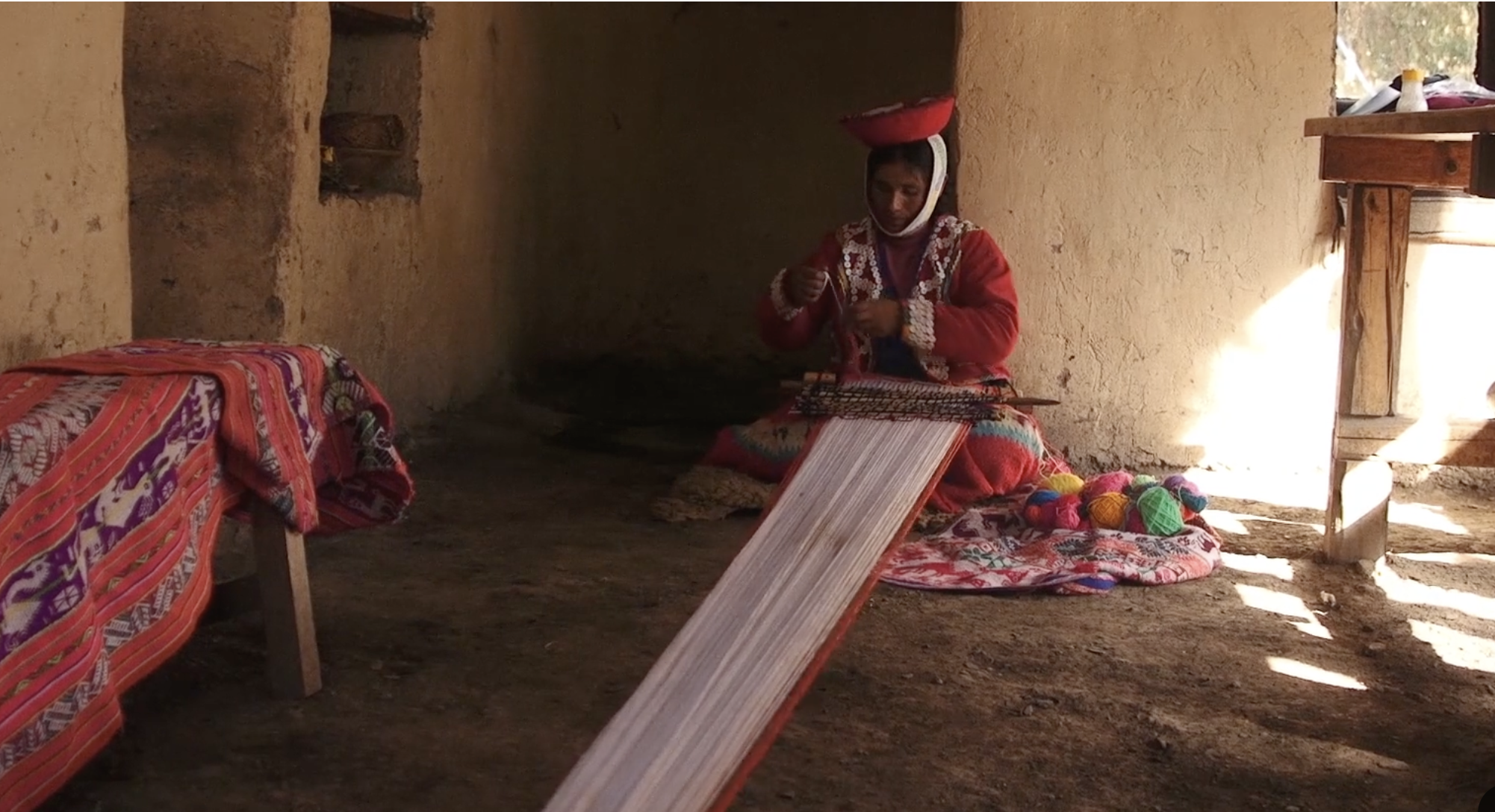
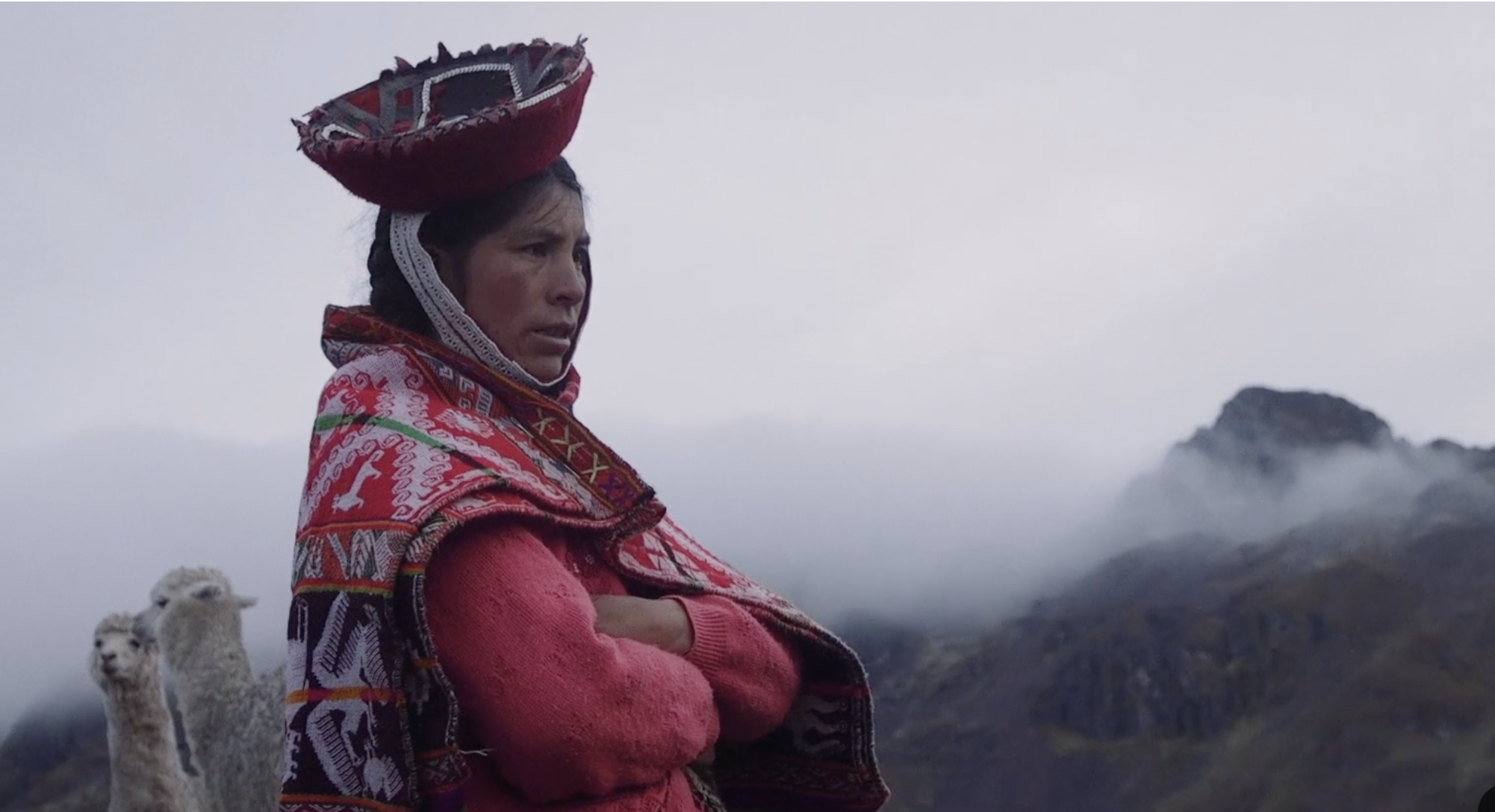
“At PALLAY, the central skill is backstrap-loom weaving. It looks simple because the loom itself is very simple, but the knowledge behind it is extremely sophisticated. The weaver controls the tension with her own body and creates complex patterns by counting and manipulating individual threads,” Rivera said. “If there is no market for this work, we don't only lose an economic activity. We risk losing knowledge that has taken generations to develop.”
Valdez worries about machine knits that increasingly imitate handwork. “We cannot replace 300 women that we have for a few machines,” he said.
© 2026 Awamaki
For Awamaki's artisans, the work often starts with their own alpaca and sheep, spun on a pushka, a drop spindle that Leavens said is “essentially unchanged for thousands and thousands of years.”
Still, Awamaki faces the same limits. Handspun, naturally dyed textiles are beautiful, Leavens said, but “we also can't put it in a catalog because every piece is so different.” Sometimes Awamaki buys commercially dyed yarn so its weavers can reach export markets. To keep spinning alive, it found a product where variation is accepted: handspun knitting yarn sold in dye lots. Knitters, Leavens noted, “just want all their greens in the same dye lot to be the same green.” Her approach is to “think really flexibly about tradition.”
Today Awamaki's designers share ideas with small groups of artisans, who weave samples for the team to choose from, and every product starts from a traditional design. The artisans “have been clear that they don't want to make someone else's designs," Leavens said.
PALLAY sets expectations from the first conversation with a client and designs around what the backstrap loom does well. “We don't ask the ancestral technique to behave like an industrial textile,” Rivera said. “We design around its possibilities.” Rivera calls the process co-creation: PALLAY brings knowledge of the market, color, and function, and the master weavers bring “textile knowledge that we could never replace.” Each piece carries a photo of the weaver who made it and the name of her community.
Fair Pay and a Wider Economy
At PALLAY, prices are agreed directly with each weaverand documented in writing, based on a textile’s size, complexity, and production time. On average, 23 to 25 percent of the final retail price goes to the weaver. Further income flows to the artisans who finish each piece.MIA PERU follows government-supervised fair trade structures where pay is based on estimated hours required for specific tasks, such as knitting a sweater.Awamaki aligns artisans’ pay with the monthly earnings of local agrarian economies, noting that weaving serves as vital supplemental income.
The enterprises carry income where it would not otherwise reach. MIA PERU brings work from Huancayo, which sees few tourists, to buyers elsewhere. Awamaki has begun building a center outside Ollantaytambo so that more artisans can reach tourists, which Leavens called a huge opportunity that many artisans cannot access because of where they live.
Reaching Beyond Peru
About 93 percent of PALLAY's retail customers are international visitors, a third of them from the United States. “Our biggest challenge now is reaching customers beyond those who physically visit Cusco,” Rivera said. In the rainy season, production and delivery times can also double. R.I.S.E. Artisan Fund is participating in a loan from Beneficial Returns to PALLAY to enable the business to grow. Rivera is clear about the limit: “Growth cannot mean asking artisans to behave like a factory.”
MIA PERU, a 2026 R.I.S.E. Market Development Grant recipient, is building new routes to buyers as traditional ones shift.Peru Moda, the Lima trade show that once drew foreign buyers, has closed, and a storm during a recent New York show kept many buyers away. In response, the company is developing direct online sales, structured so they don't undercut its wholesale clients. With those wholesale buyers, Valdez plans to turn handmade variation into a selling point by presenting each sweater as a work of art.“One piece of art is never the same or like the others. It's a unique thing,” he said.
© 2026 Awamaki
An Andean Textile Route
Together, these three organizations span the route most travelers take through Peru. In Lima, visitors can see how Peruvian craft enters contemporary fashion; in Cusco, learn how ancestral technique becomes design; and in the Sacred Valley, visit the communities where the knowledge lives. “I would love to see this become an Andean textile route in the future,” Rivera said.
Rivera shares the story of América, 26, from the Acchahuata community and whom Rivera has known since she was 16. “For me, América represents the future of Andean textiles,” Rivera said. “It's also about inspiring a new generation of women to feel proud of their heritage.”
“My dream for PALLAY is not simply to sell more products,” she said. “If we can create strong markets for extraordinary Andean craftsmanship, then tradition doesn't only survive. It has a future.”


