
Karghewale: Weaving Agency Into the Fabric of Indian Handloom
By Megy Karydes
As part of a series of “fireside chats” sponsored by R.I.S.E. Artisan Fund, Sourodip Ghosh and Nivedita Rai shared their vision as co-founders of Karghewale.
In Hindi, "kargha" means loom. Add the suffix "wale," a common construction meaning "people of," and you have Karghewale: people of the loom, or weavers. For the young weavers in this network, the name means something deeper than craft. It means belonging, ownership, and a future they are actively shaping.
Founded in December 2020, Karghewale operates at the intersection of traditional handloom weaving and entrepreneurship. Based in Maheshwar, Madhya Pradesh, a town famous for its fine silk weaving, the enterprise works with artisan-designer-entrepreneurs across four states: Madhya Pradesh, Gujarat, West Bengal, and Bihar. Currently incubating more than 40 weavers, Karghewale offers something most fair trade models do not: not just a fair wage for labor, but the tools to elevate their work entirely, giving these weavers genuine agency over their designs, their businesses, and their futures.
Beyond the Wage Model
The founding insight behind Karghewale was born from a problem co-founders Sourodip Ghosh and Nivedita Rai watched unfold early in their careers in development. "The model most people use is very common in craft in India," Sourodip explained. "You engage the artisan to execute and create the product, but they are not involved in any of the conceptual or design stages. Because you have taken so much of the role away from the artisan, the thing you are remunerating them for is labor."
Labor revenues, even under fair trade circumstances, don't compensate artisans for the true work required to bring a product to life. Working 13- to 14-hour shifts, weavers might earn 12,000 to 15,000 rupees a month, a sum achievable through far less demanding work. Without pride of creation or a path upward, young people had little reason to stay in the craft.
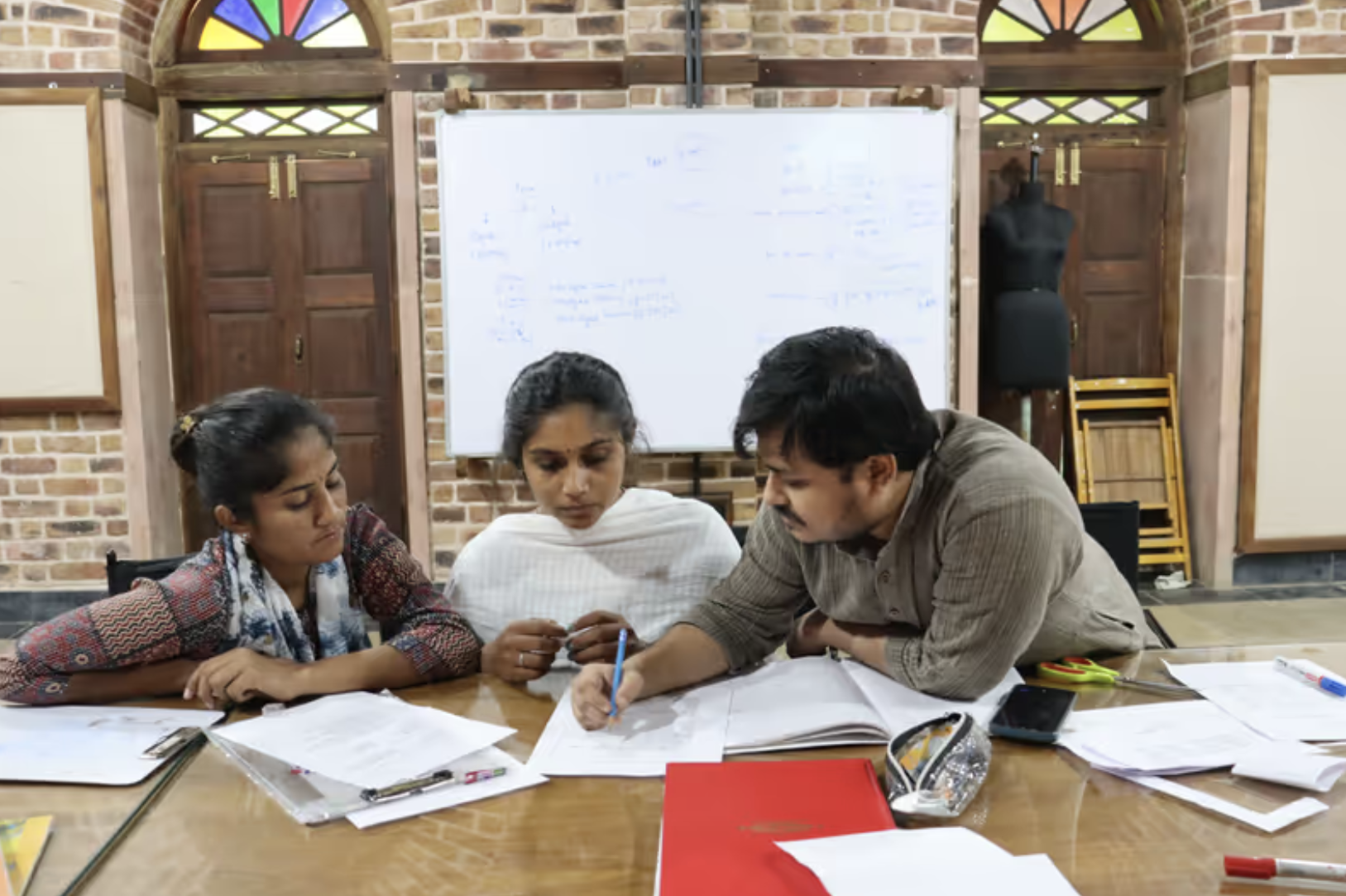
Karghewale co-founder, Sourodip Ghosh mentors students on the business of weaving via the studio's incubation program. © 2026 Karghewale
Karghewale was built to change that situation. The model focuses on what Sourodip calls "agency building" rather than labor-linked production. Building on the foundation of The Handloom School's training in technique, color theory, digital literacy, costing, and design, Karghewale takes weavers to the next level: a full incubation program that provides the marketing and administrative support they need to grow their own businesses. This allows each of them to become an entrepreneur who brings their own designs to market and gradually secures their own clients.
"When Karghewale talks about weavers, we talk about weaver-designer-entrepreneur," Nivedita added. "Extending the role. Enabling them to become the master weaver who is also the business owner and presenting their product and taking it to market."
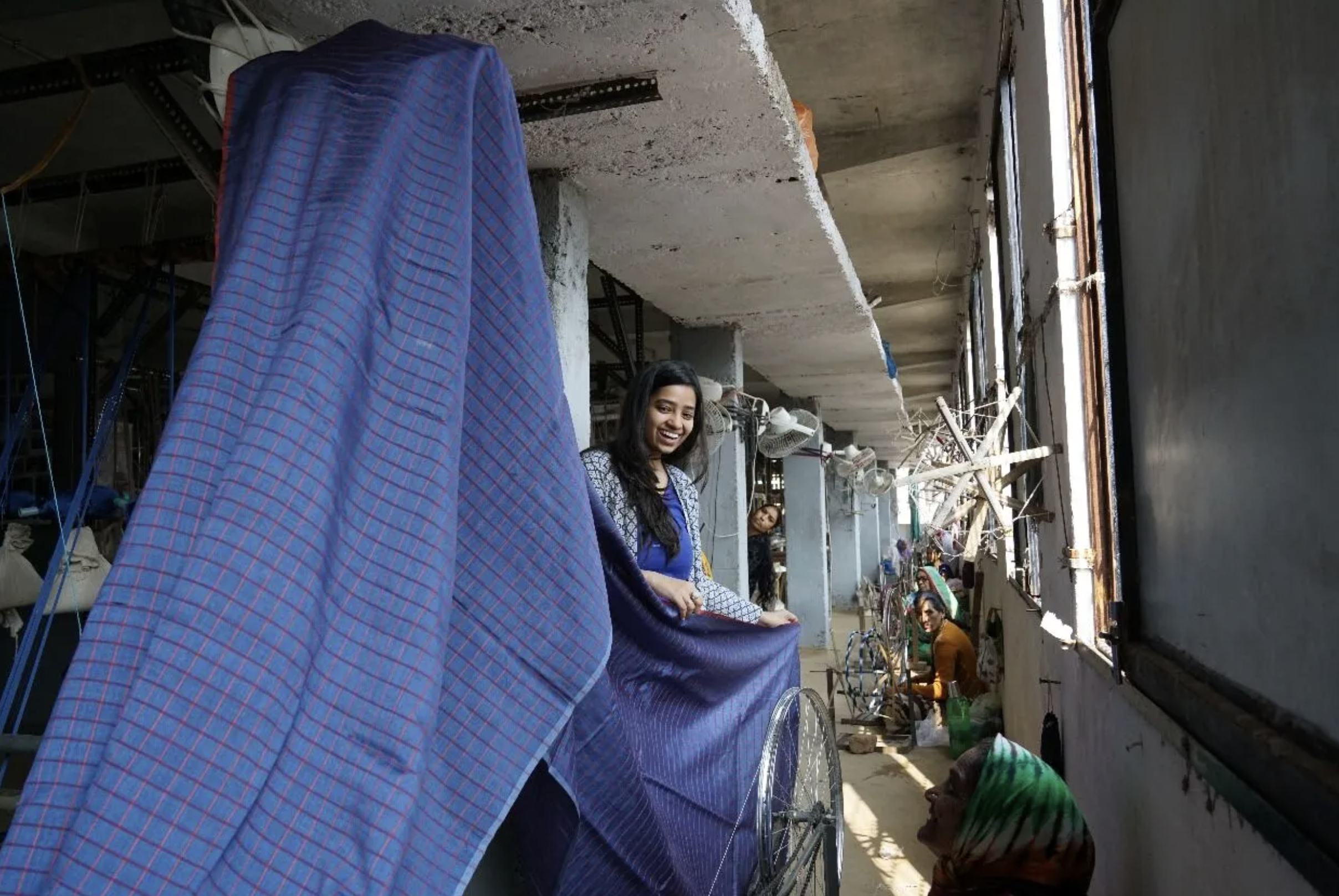
Nivedita Rai, Karghewale co-founder works hand-in-hand with weavers on technique, color theory and design. © 2026 Karghewale
A Pipeline Built on Education
When weavers complete their training at design schools like The Handloom School and enter the Karghewale incubation, they arrive with a portfolio of original designs and entrepreneurial aspirations for their business. Karghewale provides a guaranteed monthly order and a design mentor to help refine their work for the market. Clients include boutique owners and ethical resellers in India, as well as sustainable fashion labels from the United Kingdom, United States, and Australia that find Karghewale through Instagram, trade shows, and word of mouth.
Sourodip and Nivedita shared the story of two friends from Maheshwar, Shahrukh Khan and Shahnwaj Khan, to illustrate the model's impact. Shahrukh was born with a congenital eye defect that progressively worsened. Working with Maheshwar's fine silk yarns strained his eyes, so he turned his design education toward cotton instead. Using multi-shaft patterned weaving with thicker fibers, he developed a signature design language of distinctive yardages that were light to wear and visually outstanding.
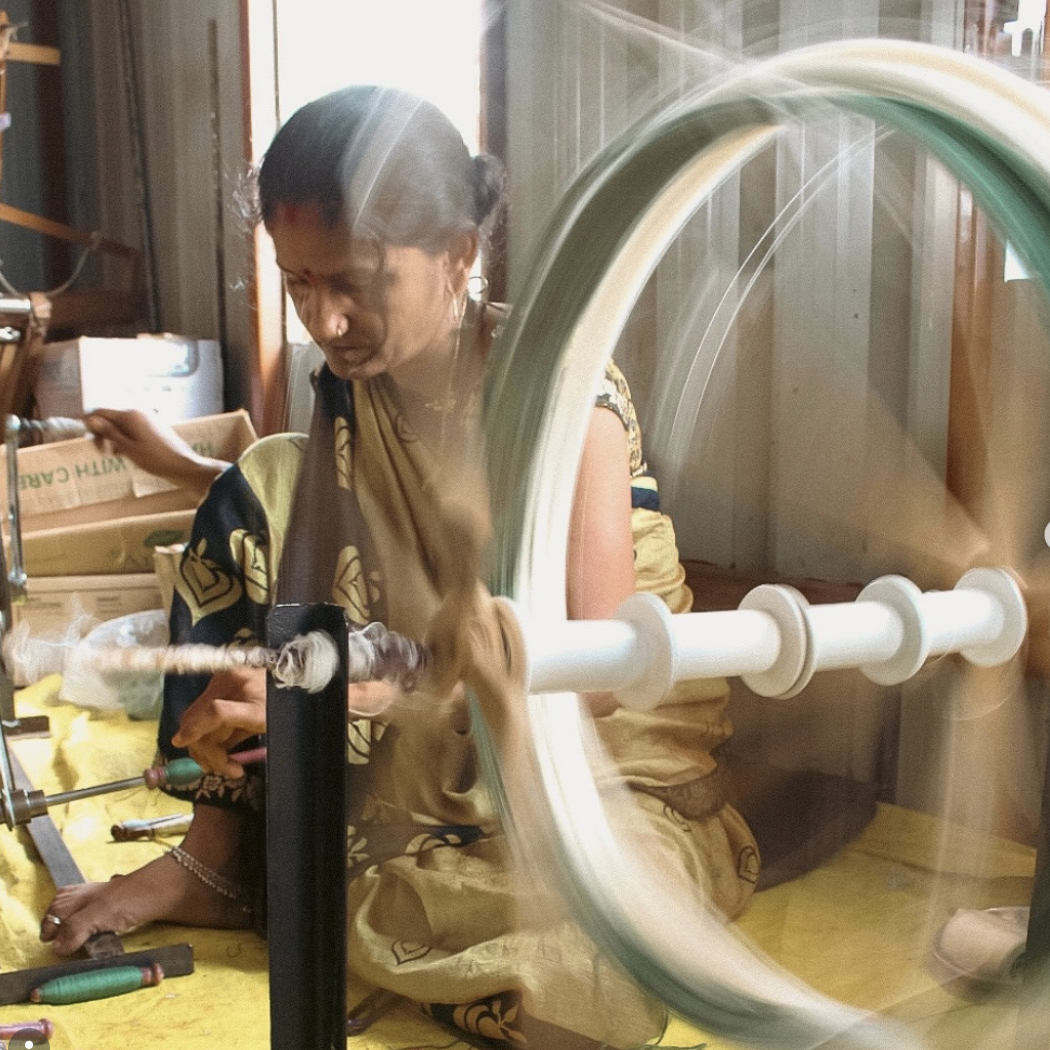
Karghewale supports a network of roughly 800 artisans, including over 120 creative entrepreneurs who directly employ 350 plus weavers. This core network indirectly supports over 1,000 ancillary workers, such as yarn spinners, dyers, and bobbin winders. © 2026 Karghewale
Today, Shahrukh runs two looms. On one, he fulfills orders through Karghewale. On the other, he fills orders he has generated himself through Instagram, WhatsApp, and a reputation built design by design. His income has grown to roughly 35,000 to 36,000 rupees a month, more than three times what it was when he first joined. He has since had LASIK surgery to protect his remaining eyesight.
Shahnwaj has faced a different kind of hardship: family crises and financial losses that might have ended another person's venture. When his father was diagnosed with stage three oral cancer, Shahnwaj covered his care, upgraded his family's house, paid for his own wedding, helped fund his brother's, and is now supporting a sister's education. His income has reached around 30,000 to 35,000 rupees a month. His signature product, waffle weave towels sought after by clients in Australia and New Zealand, is identifiable, reorderable, and the work of a creative entrepreneur who owns his designs.
Nothing Wasted, Not Even the Yarn
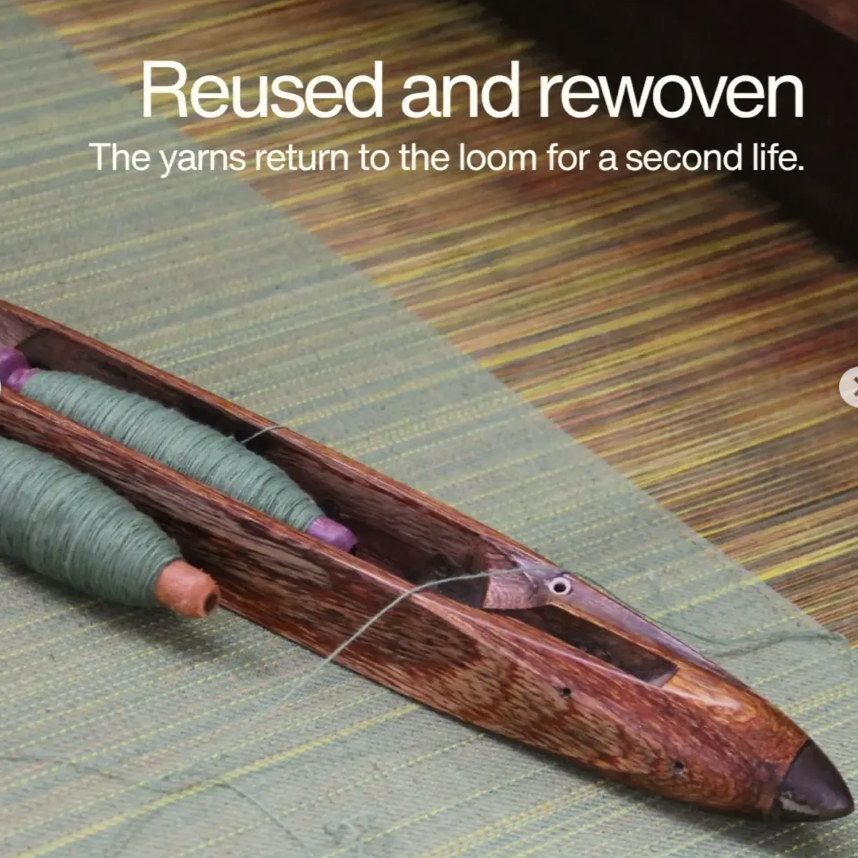
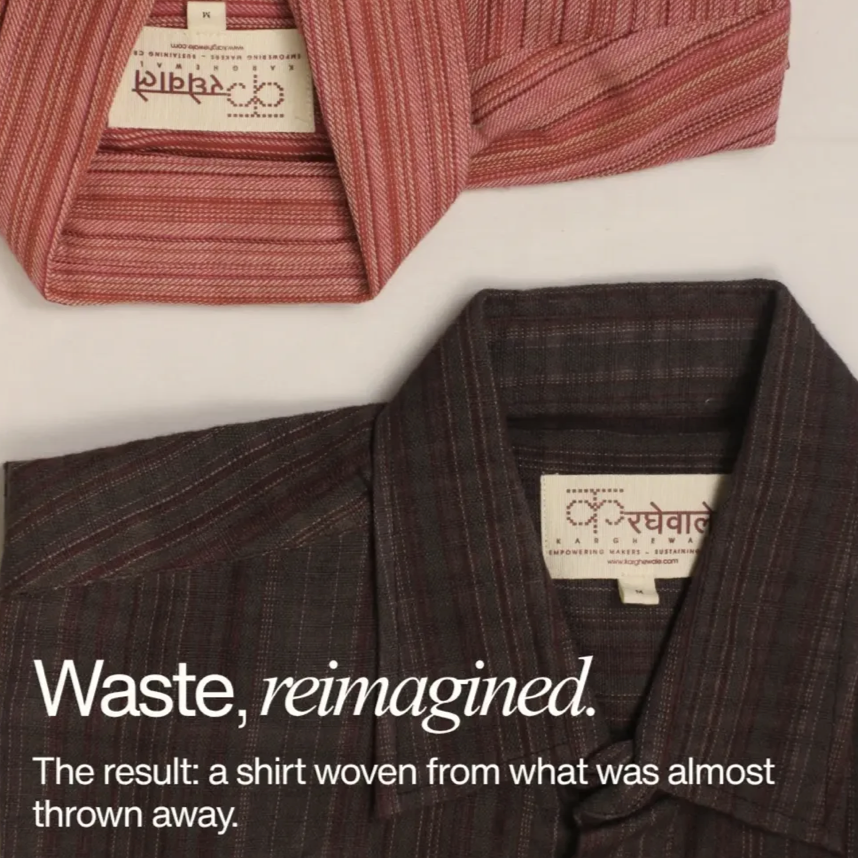
Sustainability at Karghewale extends to the scraps. Every loom run leaves behind lengths of yarn. The remnant yard is either too short for reuse or too good to discard. Over five years, Karghewale accumulated a room full of remnants in dozens of colors and yarn counts. Their solution was to embrace the randomness: color-segregating leftover yarns, blending them, and weaving them together into textiles that are entirely one of a kind. Using just 20 percent of their accumulated waste, they have already produced 450 to 500 meters of these bespoke fabrics.
Shahrukh leads much of this work. "All we need to do is give him a bunch of yarns together, and he's able to create wonderful textiles," Sourodip said. "He'll just look at the colors, arrange the warp, and create something that always looks wonderful."
The Question Nobody Is Asking
Indian handloom has faced structural pressure for decades, from power looms to fast fashion, and a market that often cannot distinguish between the two. Sourodip and Nivedita are clear-eyed about what the current conversation misses.
"Handloom hides so many kinds of injustices," Sourodip said. "People are still happy buying handloom because the optics are so nice. But what does it actually hide?" The question they want consumers and policymakers to ask is not merely whether something is handloom, but whether the weavers producing it have agency, upward mobility, and a stake in what they make.
This year, Karghewale pivoted to a full-stack service model: offering clients a complete path from concept to finished product. The aspiration, as Nivedita describes it, is to become an export house for Indian craft. "If someone wants to use handcrafted, more sustainable textiles and crafts, we can be the partner who can help them end-to-end," Sourodip explained.
Fundamental to Karghewale is the conviction that craft is a creative economy story. It’s one where human expression and entrepreneurial ambition are inseparable from the threads being woven. For Karghewale, that belief is the warp on which everything else is built.
Make an Impact.
Visit www.karghewale.com, follow Karghewale on Instagram or read "Why We Invested: Karghewale" announcing our 2023 investment to learn more.
The R.I.S.E. Artisan Fund invests in early-stage artisan enterprises creating sustainable livelihoods for rural communities with few economic alternatives.
Join us in creating opportunities. Make an impact.


