
Kullvi Whims: Where the Himalayas Spin Their Own Story
As part of a series of “fireside chats” sponsored by R.I.S.E. Artisan Fund, Nisha Subramanian and Brighu Acharya shared their vision as co-founders of Kullvi Whims.
By Megy Karydes
In the Kulu Valley of Himachal Pradesh in India, “kullvi” simply means “belonging to Kulu.” The “whims” in Kullvi Whims tell a different story. It is one that started as an acronym for Women of Himachal Self Help Group, but became something truer when Nisha Subramanian arrived and discovered that no matter the design she developed with the women, each one wove or knit in a small personal deviation. A different motif placement. An unexpected fleck of color. A signature the maker couldn’t quite suppress.
They kept “whims”. That spirit, of individuality and of craft that resists exact replication, is the force behind everything Kullvi Whims makes.
Wool That Had Been Thrown Away
Kullvi Whims was founded in 2012 with nine women and acrylic yarn, which was the only material available in local markets at that time. But co-founder Brighu Acharya, who knew these mountains from years of guiding treks, kept noticing the Gaddi shepherds on their trails, their flocks heavy with fleece that no one seemed to want. Transporting raw wool down from the high pastures cost more than it earned, so shepherds sheared their sheep and left the wool where they stood.
Reclaiming that wool took years. Understandably, the Gaddi shepherds were suspicious at first since nobody had ever asked them for it in the past. Nisha and Brighu bought small quantities, brought the fleece to the valley women, and began the slow process of rediscovering what it meant to work with it.
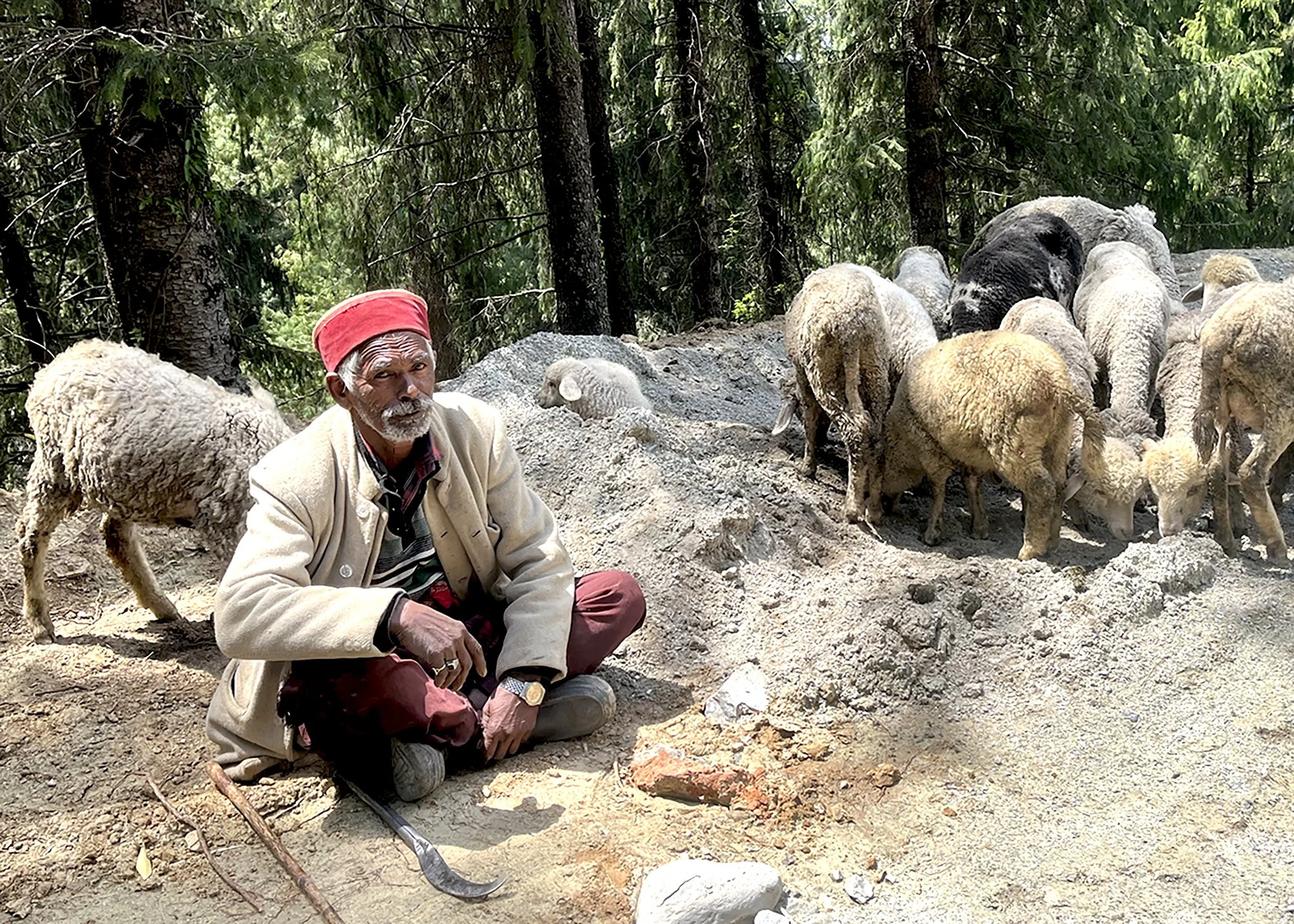
Kullvi Whims works with 200 nomadic shepherd families who move their flocks from the valley to summer pastures high in the Himalayas. © 2026 Kullvi Whims
Older women remembered techniques their grandmothers had used. Early results were tight and flat, shaped by hands trained on acrylic. It took years of experimentation to coax the fiber back into its natural loft.
Kullvi Whims now works with around 400 women artisans across the valley and sources from approximately 200 Gaddi shepherd families. It’s a story of two interlocking communities whose fates they have quietly tied together.
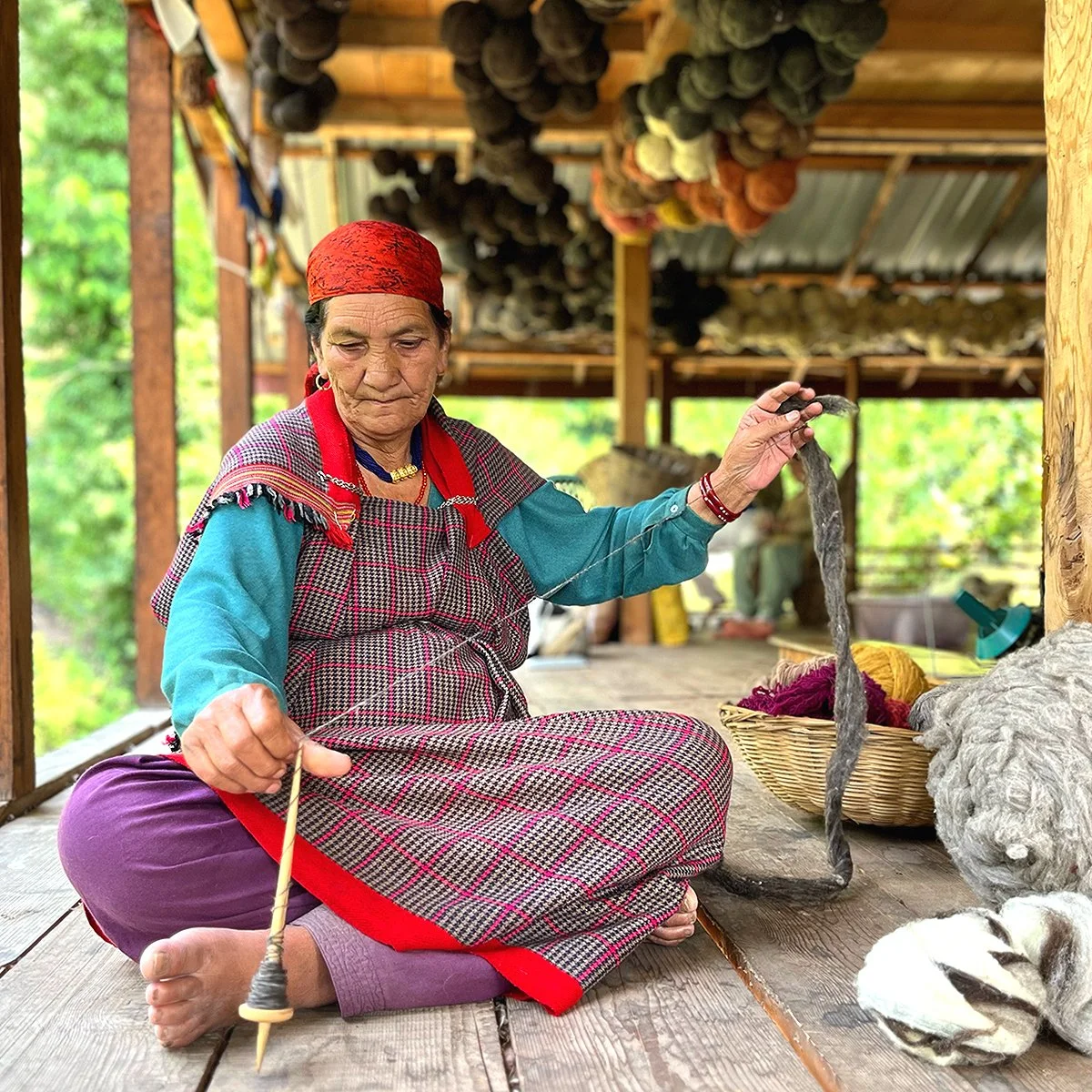
Yarns are handspun using wool purchased from the Gaddi shepherds. © 2026 Kullvi Whims
Color From the Valley Itself
Kullvi Whims’ natural dye program grew the same way: organically and rooted in what was already there. Walnut shells came first, abundant in the valley orchards and part of living memory. The women recalled grandmothers boiling them in pots. Marigolds were everywhere, so those were easy to source and use. Onion peels came from the local grocery and pomegranate skins came from valley orchards. Wild berries, Himalayan blooms, rhubarb from higher elevations were foraged when the season offered them. The women tested everything. Admittedly, some experiments produced only a muddy yellow-green. Others yielded purples and pinks that felt, as Nisha put it, “pretty magical.”
As production scaled, they sourced madder root from the south and bark from Rajasthan, and introduced more scientific rigor. The women artisans now track pH levels and water temperatures for consistency. The whims aspect, Nisha noted, never fully leaves even the dyeing process.
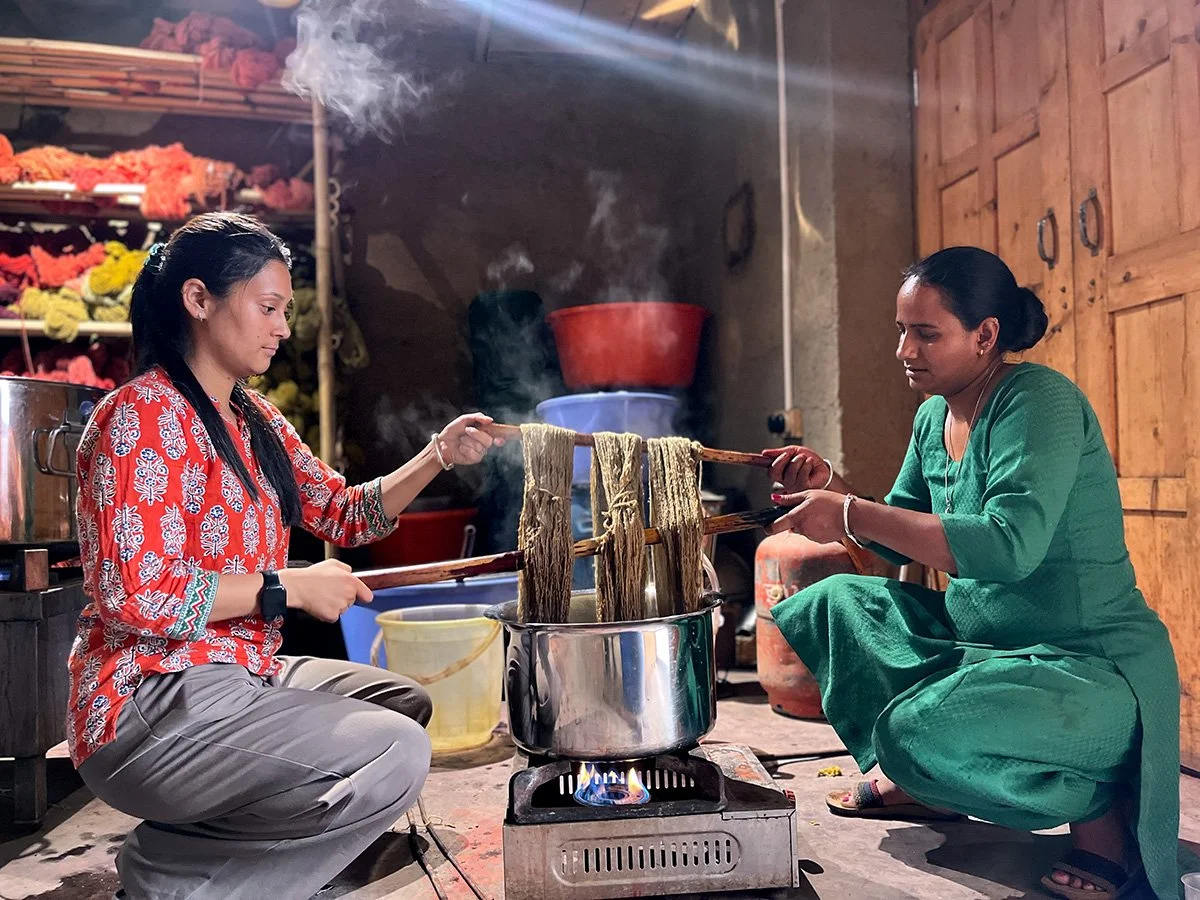
Handspun yarns are naturally dyed using local flora. © 2026 Kullvi Whims
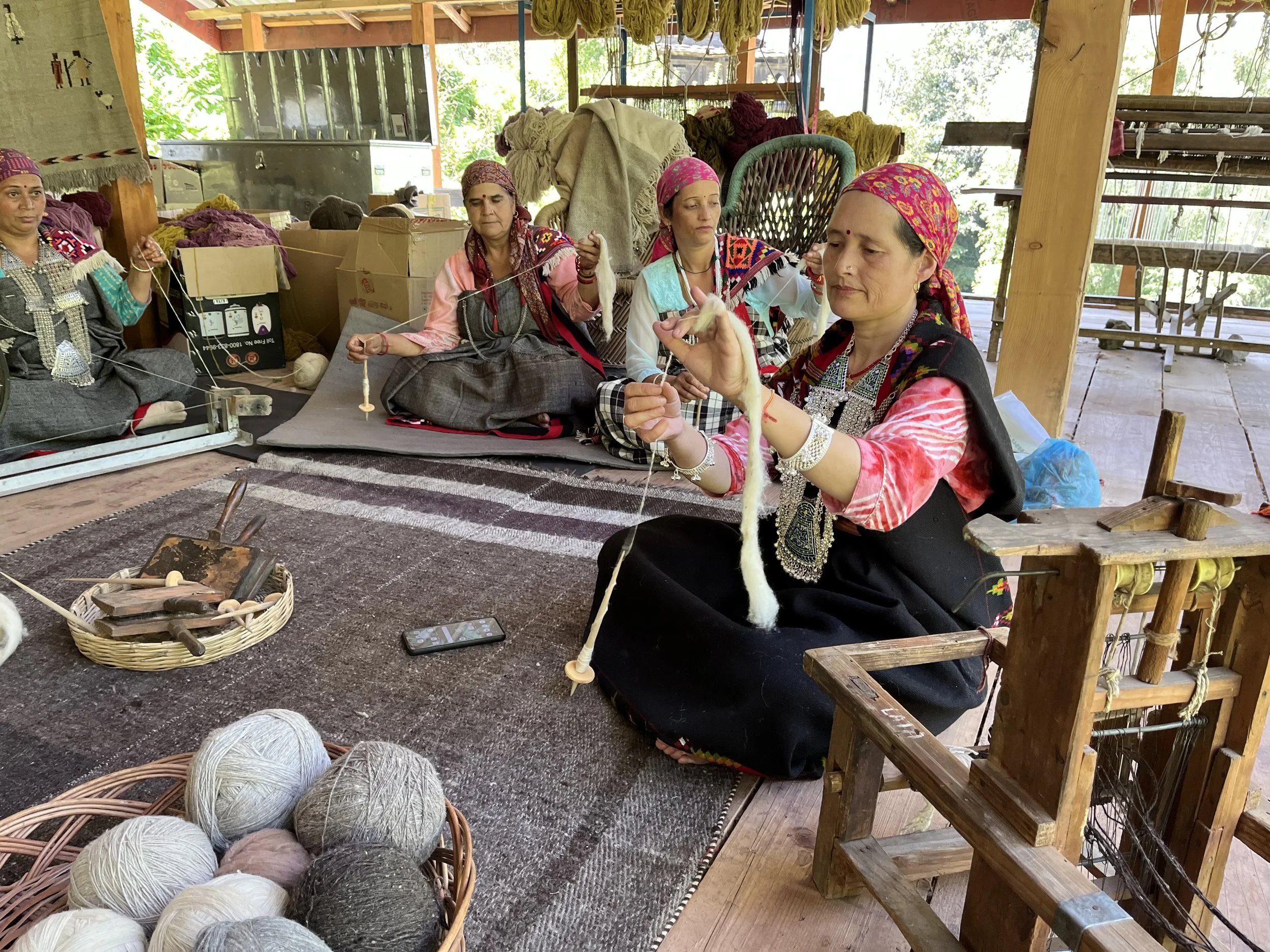
Kullvi Whims now works with more than 400 women artisans across the Kullu Valley in northern India and sources from more than 200 Gaddi shepherd families. © 2026 Kullvi Whims.
The Instagram That Showed Everything
When COVID-19 arrived in 2020, just as the supply chain was finally in place, Brighu took over Instagram. He went live at the carding mill. He posted spinning videos. He shared shepherd footage from the mountain trails. What he found was that the very processes the fashion industry typically hides, including the labor, the landscape, the people, were exactly what an audience starved for authenticity wanted to see.
“Everyday magic is happening,” Brighu said. “We never plan what to post. When something is happening in the studio or in a cluster, we just put it out.” European customers, reassessing consumption habits during lockdown, found them. The timing was not luck exactly. Rather, the enterprise was ready for a digital world. And the women who appeared in those posts – seeing thousands of strangers respond to their faces and their work – changed how they carried themselves. “Sometimes they are singing,” Brighu said.
A Jacket Worn at Budget Day
In 2025, their local Member of Parliament, also a well-known Bollywood actress, discovered their work at a small government exhibition, visited their studio, and commissioned a jacket for Parliament. When the Union Budget was presented, she proudly wore a Kullvi Whims piece each day of the session. The press covered it. The Textile Ministry of India posted about the brand.
The more significant outcome was not the traffic spike or the quick orders that followed. It was the seat at the table. Kullvi Whims was invited to join a government think tank on the textile budget, the only organization from Himachal Pradesh selected, and among the few in India working exclusively with 100% indigenous wool. “Those doors wouldn’t have opened to us before,” Nisha said. “We’d have been considered too small.”
The Shepherds at the Bottom of the Supply Chain
Brighu is direct about what is at stake for the Gaddi community. These nomadic herders walk 600 kilometers each year between winter grounds near the Punjab border and summer pastures high in the Himalayas. They once moved through the valley and were welcomed. Farmers would offer their fields for grazing in exchange for the manure that enriched their land. Now, with apple monoculture crowding the hillsides, they are honked at on the roads, their sheep occasionally stolen in transit. One large US company recently cut the price it pays for Himachali wool by half, a unilateral decision that rippled immediately down to the shepherds.
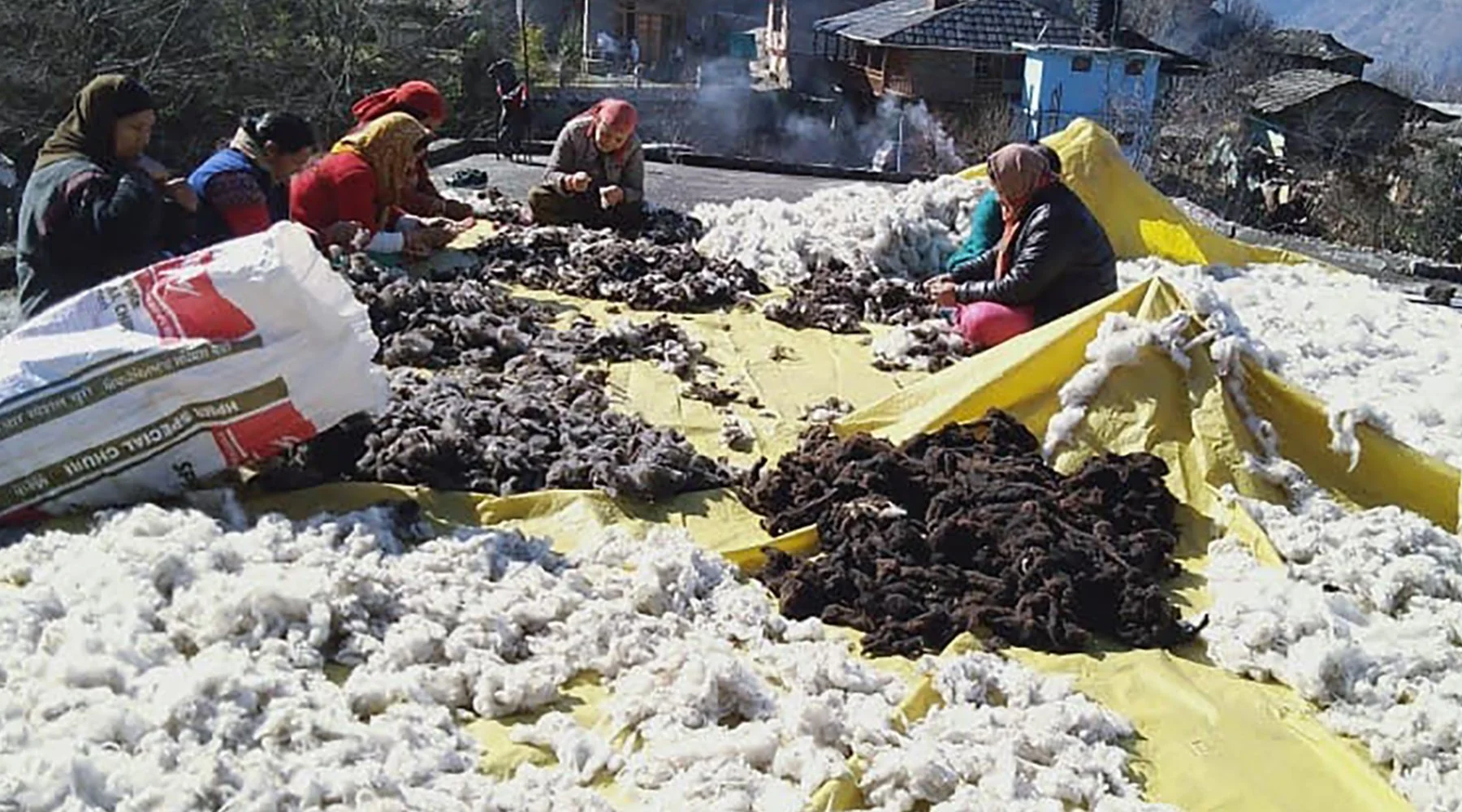
Wool purchased from the shepherds is washed and then dried in the sun. © 2026 Kullvi Whims
“In Himachal, 80% of wool is still thrown away,” Brighu said. The goal, still in progress, is to build a yarn supply chain robust enough that local artisans across the region can access quality handspun wool, creating demand that flows back to the Gaddi as both income and recognition. Artisan wages at Kullvi Whims are already set at two to five times the local market rate depending on the piece, with a floor above the government minimum wage for unskilled labor.
That is what Kullvi Whims is ultimately building: not just a brand, but an entire local economy. They are showing the world that an entire mountain economy, from shepherd to spinner to dyer to weaver to international buyer, can hold together with integrity at every link.
Impact Opportunity
To learn more about this impact opportunity:
Kullvi Whims Tara Collection Catalog
The R.I.S.E. Artisan Fund invests in early-stage artisan enterprises creating sustainable livelihoods for rural communities with few economic alternatives.
To invest via the R.I.S.E. Artisan Fund, you can make a tax-deductible contribution directly or via a grant from your donor advised fund (DAF).


