
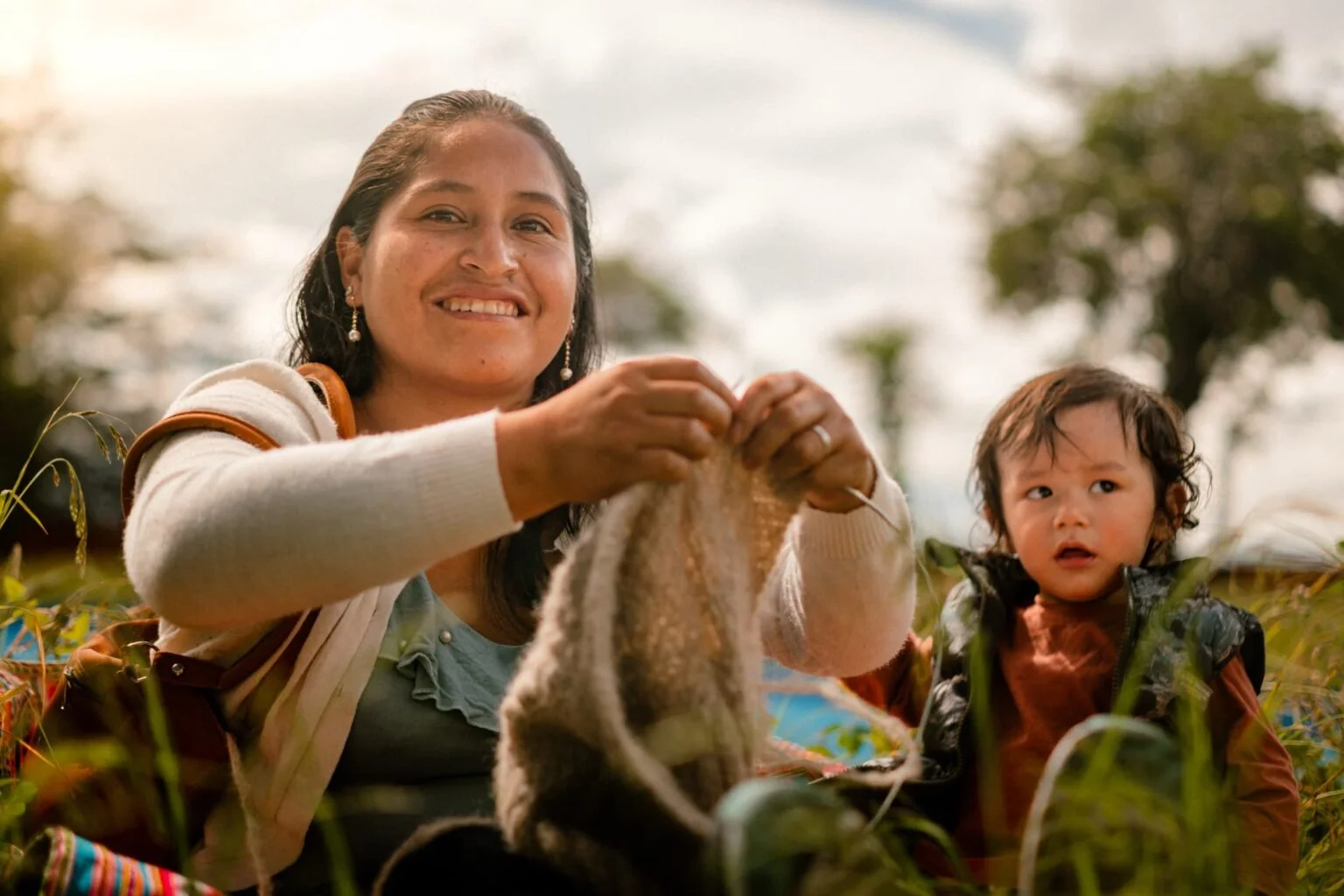
A Living Language: How Three Textile Enterprises Are Carrying Andean Traditions Forward
In the Andes, “pallay” refers to ancestral iconography: the rivers, mountains, suns, and stars that women weave into cloth. Alejandra Rivera, who named her company after the word, remembers what one master weaver told her: “For me, weaving is a language.”
PALLAY in Cusco, MIA PERU in Lima, and Awamaki in Ollantaytambo work with more than 600 artisans, most of them Indigenous women, to keep that language economically alive. Each operates a different model, but all three face the same question: how to sell handmade work in a market built around machine-made consistency.