
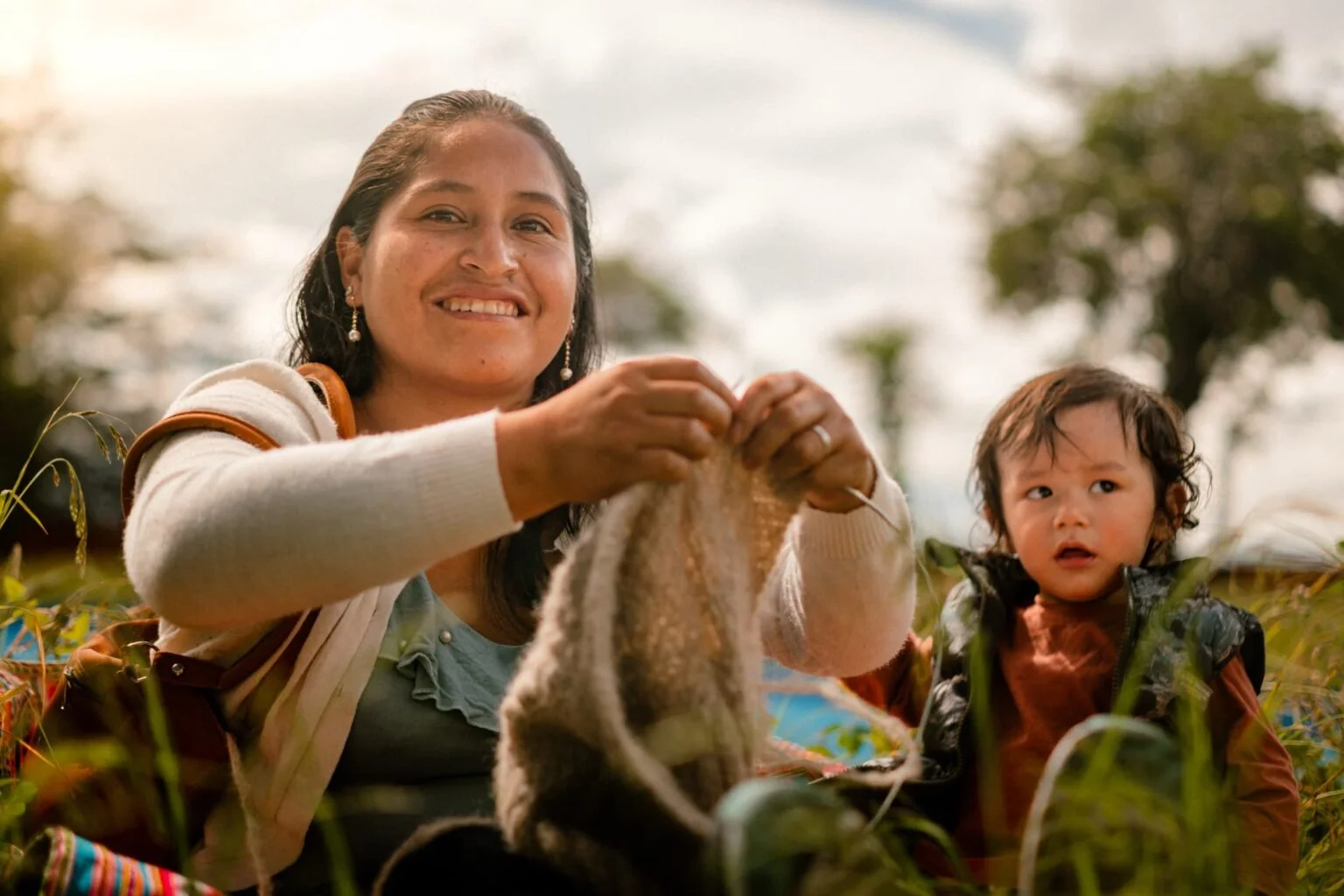
A Living Language: How Three Textile Enterprises Are Carrying Andean Traditions Forward
In the Andes, “pallay” refers to ancestral iconography: the rivers, mountains, suns, and stars that women weave into cloth. Alejandra Rivera, who named her company after the word, remembers what one master weaver told her: “For me, weaving is a language.”
PALLAY in Cusco, MIA PERU in Lima, and Awamaki in Ollantaytambo work with more than 600 artisans, most of them Indigenous women, to keep that language economically alive. Each operates a different model, but all three face the same question: how to sell handmade work in a market built around machine-made consistency.

Why We Invested: FAIR WEAVE
Founded in 2022, FAIR WEAVE is working with more than 120 women weavers in the Phnom Srok district in northwestern Cambodia to offer handwoven textiles, ethically and sustainably made with natural fibers and dyes, for home furnishings and apparel. In this region of Cambodia, Khmer women have been weaving since the 13th century. Textiles are handwoven on traditional looms with skills handed down from mother to daughter for generations.

Why We Invested: Away Pallay
R.I.S.E. Artisan Fund announced that the fund has joined Beneficial Returns, an impact investment manager, in an investment improving the livelihoods of Indigenous women weavers in the high Andes of Peru. R.I.S.E. Artisan Fund is participating in the loan that Beneficial Returns has extended to Away Pallay.