Love Handmade: A Gift of Love to the Women of Pakistan
As part of a series of “fireside chats” sponsored by R.I.S.E. Artisan Fund, Zein Ahmed shared her vision as founder of Love Handmade..
By Megy Karydes
For Zein Ahmed, “Love Handmade” isn’t a brand slogan. The name is simple and intentional, and a promise. “Love Handmade, for me, is like you can say, a gift of love to the women of Pakistan,” said Zein Ahmed, founder of Love Handmade.
Founded in 2020 in Islamabad, Love Handmade is a social enterprise working with 170 female home-based artisans across 10 villages in rural Sindh. The women produce ralli quilts, ajrak block-printed textiles, pit-loom woven scarves, and an expanding line of fashion apparel. But the enterprise is about far more than colorful, ethical fashion choices for buyers in New York, Tokyo, and London. It’s about the impact on communities in rural Pakistan when women start earning.
Love Handmade enables women, long excluded by cultural, geographic and economic barriers, to earn dignified, sustainable incomes from their homes. Through targeted training in soft skills, financial literacy, digital skills and formal business practices, Love Handmade helps women grow, not just as artisans, but as confident earners and community leaders.
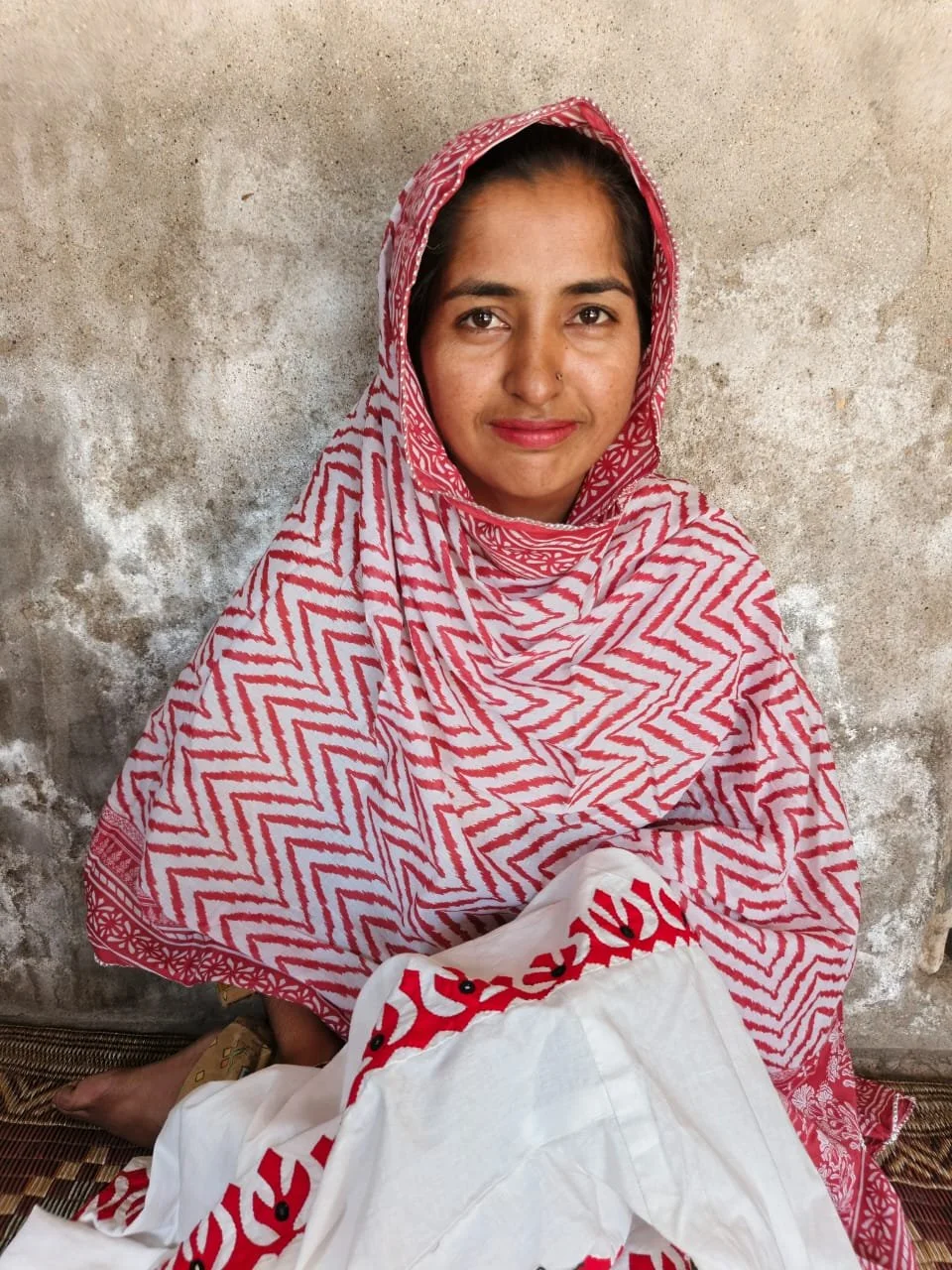
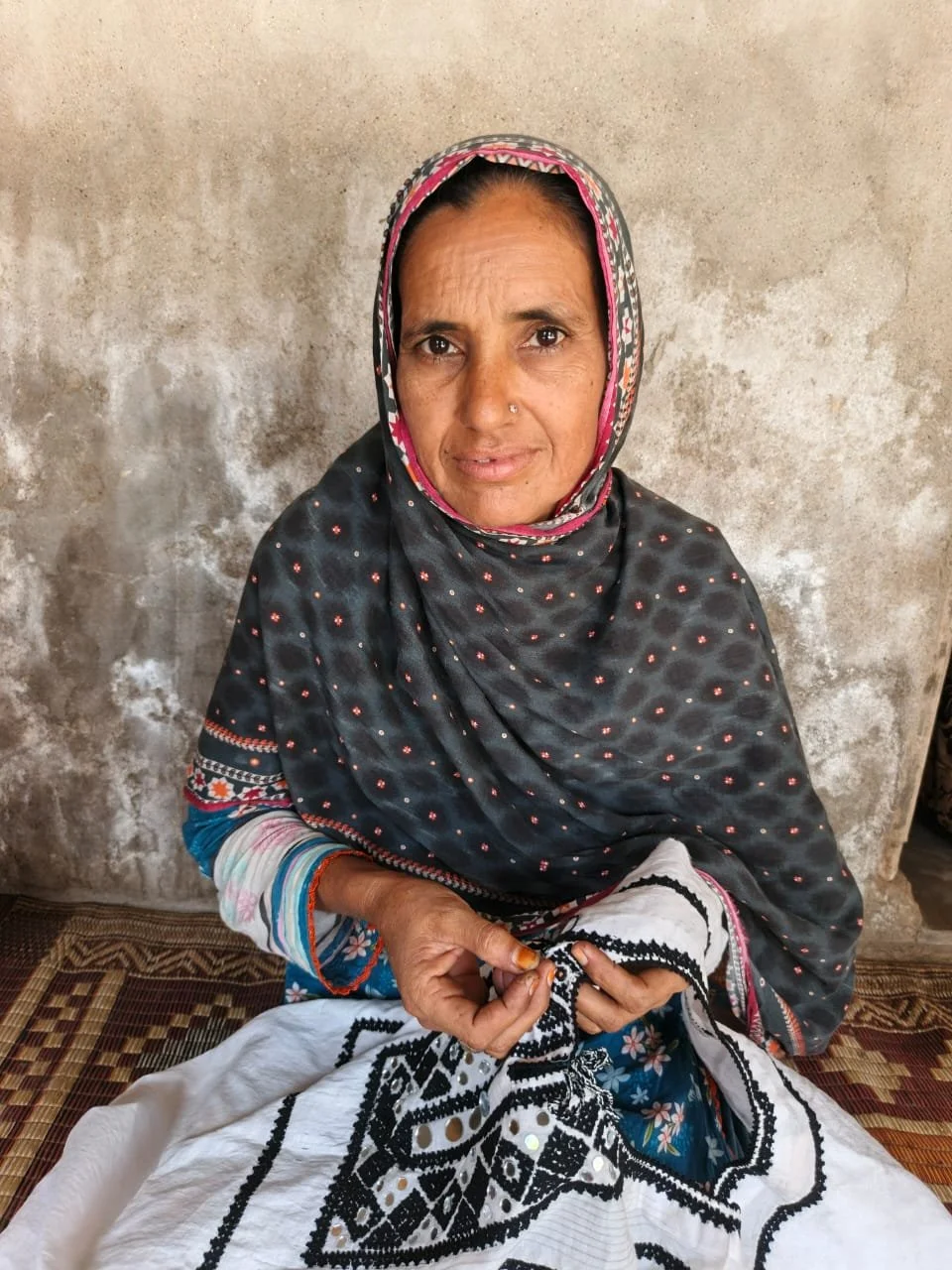
Fauzia Bibi, junior leader of one of Love Handmade’s largest artisan communities sews a garment for the label’s first clothing line—designed entirely by the artisan. She assists Lead Designer Hooran Bibi by managing work distribution and quality control. Hardworking, meticulous, and calm under pressure, she is a quiet force behind the scenes. © Love Handmade 2026
An Emergency Response Born of Crisis
Love Handmade didn’t start with a business plan. It started with a global pandemic and rural communities with no income to buy food to feed their families during the lockdowns.
Zein is a designer, ethical fashion advocate and social entrepreneur by training and practice. She returned to Pakistan in 2017 after nearly two decades in New York, where she had built Guru, an ethical fashion label stocked in nearly 200 boutiques across the U.S. and Europe. She returned wondering: what could she do for the women of Pakistan, a country that ranks last globally in gender parity?
(According to the World Economic Forum’s Global Gender Gap Report 2025, Pakistan ranked 148th out of 148 countries, placing last globally. With a gender parity score of 56.7%, the country hit rock bottom, showing persistent, worsening inequality in economic participation, political empowerment, and educational attainment.)
When COVID-19 hit in early 2020, the artisans Zein had been training as a consultant for the Japanese International Cooperation Agency (JICA) faced an immediate crisis. “We are talking about life and death, not just suffering,” she said. “They were definitely going to suffer starvation or would have had to take loans from loan sharks to survive and would have gone into generational debt and a lot of abuse.” She spent three months distributing rations and medicine. By August, she launched Love Handmade with two products: face masks for densely packed rural communities, and ralli quilts. The same donors who had contributed to Zein’s relief fund became her first buyers.
The relationship between Zein and her artisans runs deep. Every woman she works with is someone she has personally trained, over months and years, in design, quality control, financial literacy, and business management. They have also survived crises together: catastrophic floods in 2022 that wiped out entire villages, a locust invasion in 2021, and inflation that officially hit 48 percent in 2023. “I’ve eaten their food. I’ve been to their homes. I’ve held their children,” she said. “They are sort of my people.”
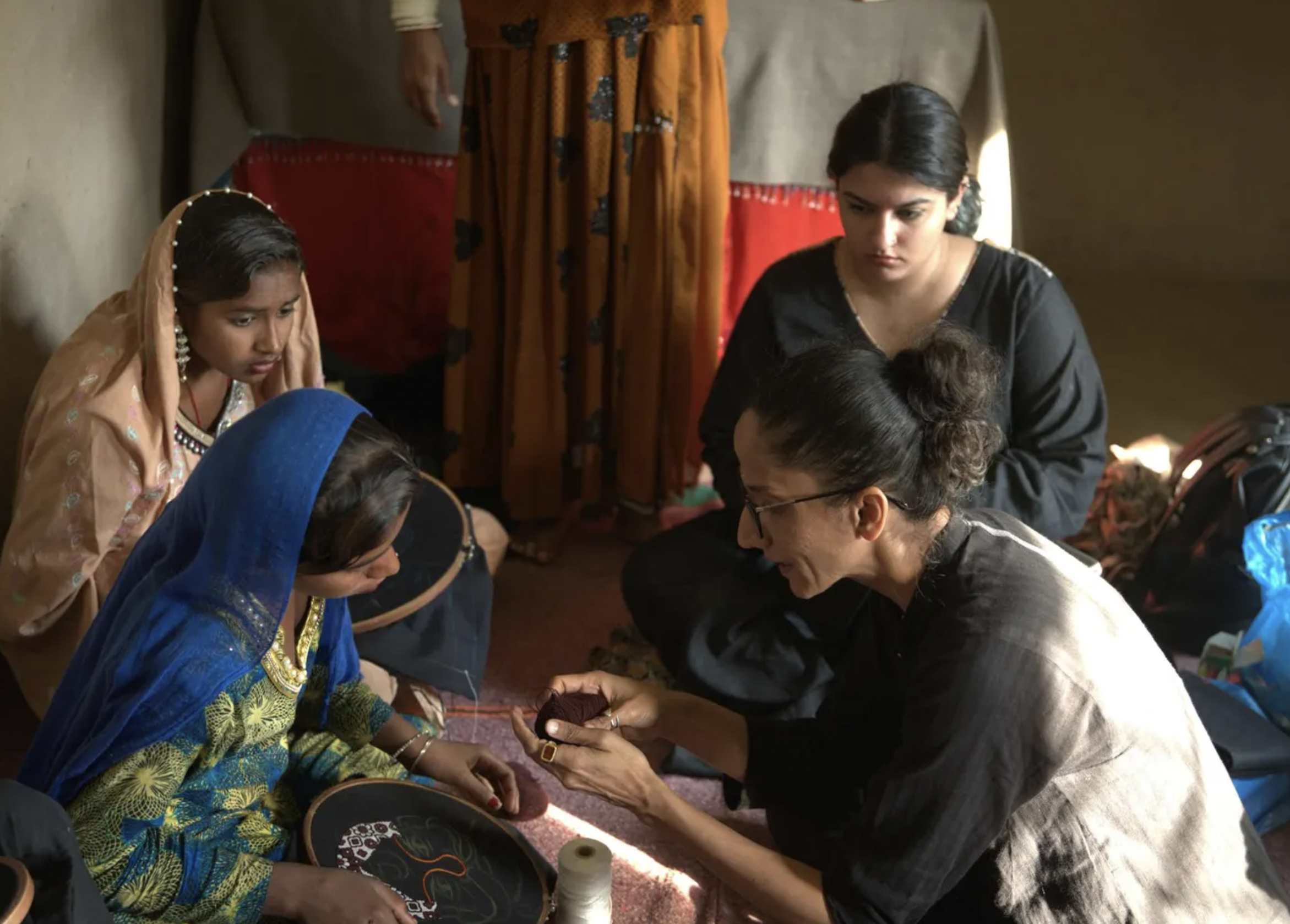
Founder Zein Ahmed provides hands-on mentorship to rural artisans, fostering the skill-sharing and collaboration essential to building sustainable livelihoods. © Love Handmade 2026
What the Wage Actually Does
Zein built her pay structure based on what a woman needs to earn each month to be able for her children to eat three meals a day, attend school, and receive medical care. She calculated that amount as roughly $100 a month, or 30,000 Pakistani rupees, and built her rates accordingly.
The model accounts for the physical reality of craft work. Artisans are divided into two tiers: A-grade artisans, the most experienced, and B-grade artisans, who may be younger women still developing their skills or mothers of small children with limited hours. None of them can work a standard eight-hour day. “You will go blind. Their eyes would get ruined. Their fingers start bleeding,” Zein explained. So she structured work and pay around one to three hours of daily production. Even so, her artisans earn three to five times what they were making before, and the youngest among them, unmarried women in their late teens and early twenties who can dedicate more hours, have become the primary breadwinners for their families.
The income the women earn has a significant impact on family dynamics. Men who never helped with household work began doing so, freeing wives and daughters to work and earn more. Girls facing arranged marriages began refusing, with families no longer in a position to insist. Of the young women who were 13 or 14 when Zein first arrived, now in their early twenties, only two out of nearly 100 young women have chosen to marry. “The girls don’t want to get married,” she said. “And the families are telling me they don’t want to get them married either,” since the family would lose the income the young women earned.
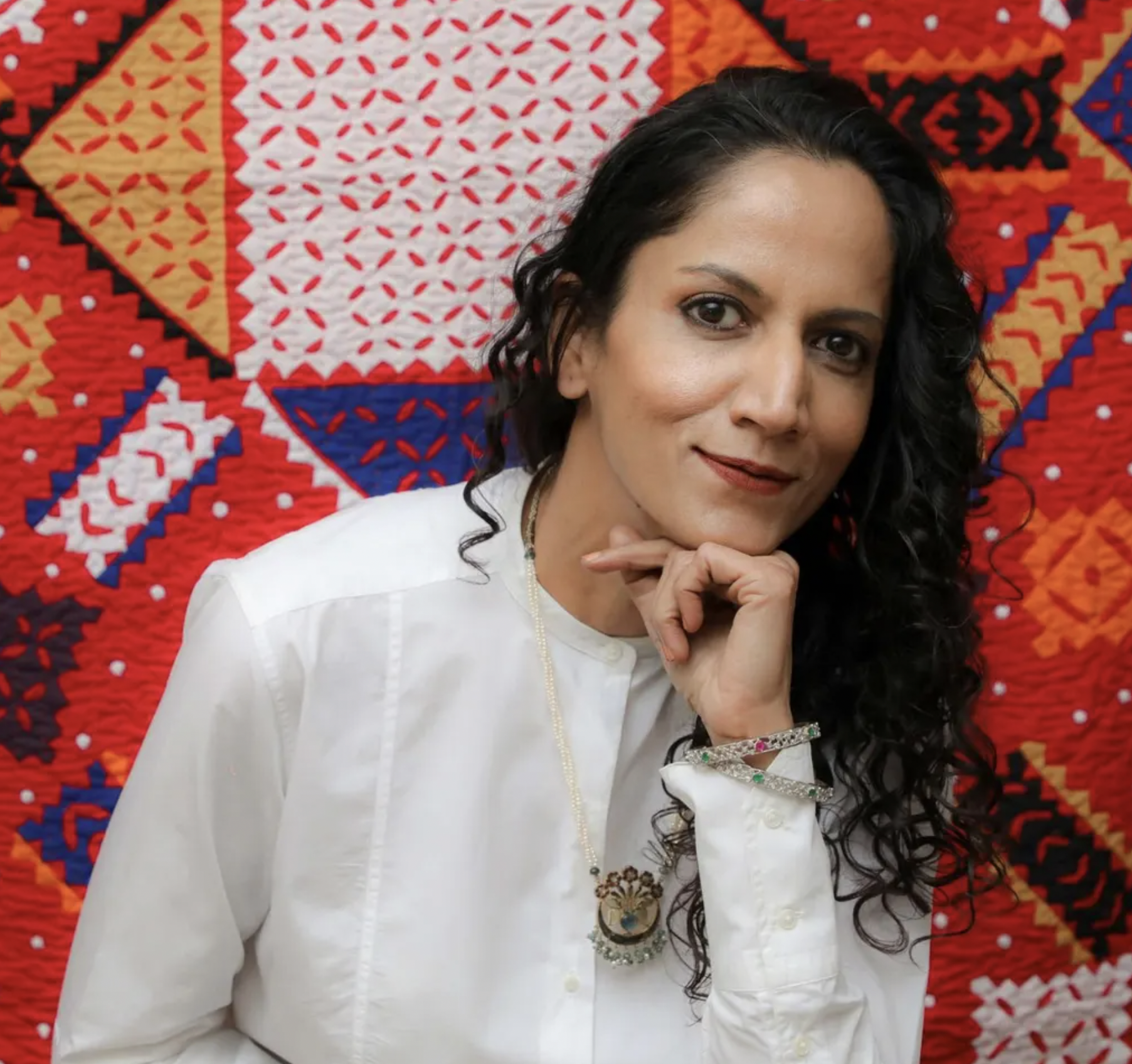
With over 30 years in sustainable design, Zein Ahmed is a slow fashion pioneer who transitioned from her New York label, Guru, to empowering over 2,000 rural Pakistani women through her work with JICA. She now continues this mission through Love Handmade, a self-funded social enterprise that collaborates with a dedicated network of 170 artisans to provide dignified livelihoods.
Hooran Bibi, Love Handmade’s Lead Designer manages three artisan clusters and is seen here working on its line of crafted clothing—ralli jackets made entirely by artisans using embroidery, appliqué, and patchwork. Admired for her deep spirituality and gentle nature, she is a beloved community leader and constant inspiration to the team. © Love Handmade 2026
Nadia’s Story
Domestic violence was epidemic in the villages when Zein arrived, and it initially got worse: men suspected their wives were hiding money and responded with more abuse. Zein set conditions for working with each family: no early marriages, equal food for girls and boys, and school attendance for the children. She spent years building trust with the men directly, demonstrating that the whole family benefited financially. For most, the violence stopped.
One woman’s story captures what makes significant social change possible.
When Zein first met Nadia, she was in her early thirties with five children, living in a cow shed no larger than a parking space, with a drug-addicted husband who beat her badly enough to break her bones. Her oldest daughter was 12, already facing an arranged marriage to a 64-year-old man. Zein promised Nadia a steady income, went to her four brothers and asked them to protect Nadia and her children, and promised to stand by Nadia for the next ten years.
Today, Nadia is one of Love Handmade’s most gifted artisans, earning over $200 a month. Her oldest daughter, now 23, is getting married this month to a young man with a permanent government job. This match happened, Zein said, “because of the life of dignity the mother lived, because of her income.”
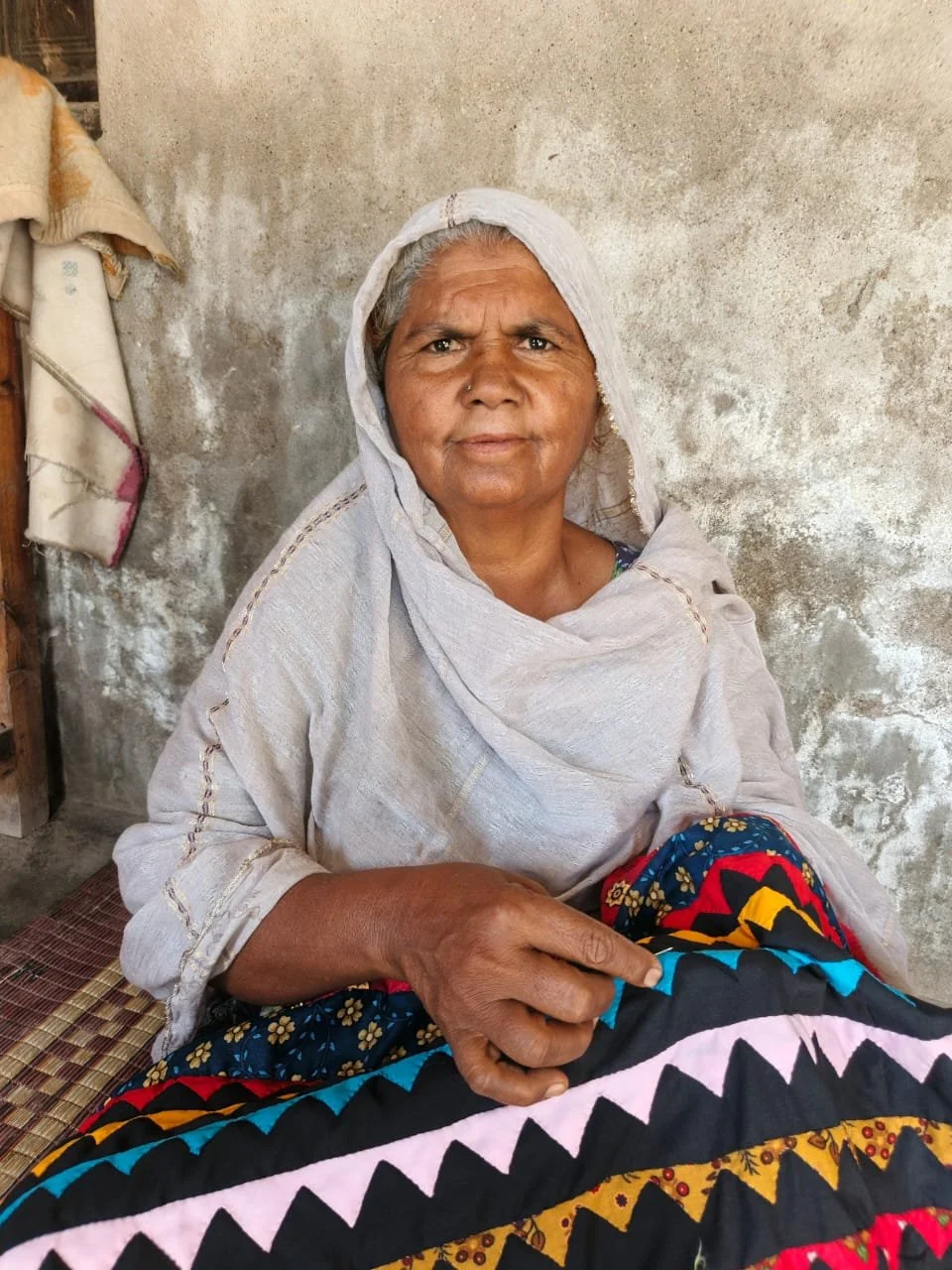
Sahib Zadi, a senior artisan, carries deep knowledge of ralli making and finds joy in the quiet hum of craft work. Her expertise inspires younger artisans to thrive and evolve under her gentle guidance. ©LoveHandmade2026
Designing for Two Worlds
Love Handmade’s products are co-designed. Zein brings ideas about color and form; the artisans shape them through the feel and logic of their craft. The ajrak, a resist-print textile with roots going back more than 5,000 years in Sindh, is rendered in new colorways, including a line honoring the Shia identity of many of the artisan communities in Sindh. The ralli stays true to its hand-sewn construction while color palettes are chosen based on global trends for international buyers. The first reversible ralli jacket, launched in late 2024, sold out in two days to buyers around the world who have never been to Pakistan.
The artisans have their own measure of success. When Zein first met each woman, she asked: what is your wildest dream? A few eventually answered: they wanted foreigners to buy their products and display them in Western homes. Orders have since shipped to the US, Australia, France, Japan, and the UK. Their dream is happening now – and Zein is dreaming even bigger for Love Handmade. Her vision: to build Pakistan’s first scalable artisan production system nationally, empowering 600 women in the next five years and exporting slow fashion globally.
Over the past four years of the R.I.S.E. Artisan Fund market development grant program, 21 enterprises from 11 countries have been awarded small grants. These enterprises generate sales of more than $2.6 million dollars, creating livelihoods for more than 7,500 artisans and farmers.
Love Handmade is one of the applicants to the 2026 R.I.S.E. Artisan Fund grant program. The program supports artisan enterprises with a clear mission to increase incomes to underserved communities, preserve traditional craft techniques, and address the environmental impact of their production processes.
Impact Opportunities
To learn more about this impact opportunity visit www.lovehandmade.co or download the Love Handmade Investor Presentation
The R.I.S.E. Artisan Fund invests in early-stage artisan enterprises creating sustainable livelihoods for rural communities with few economic alternatives.
To invest via the R.I.S.E. Artisan Fund, you can make a tax-deductible contribution directly or via a grant from your donor advised fund (DAF) or foundation.